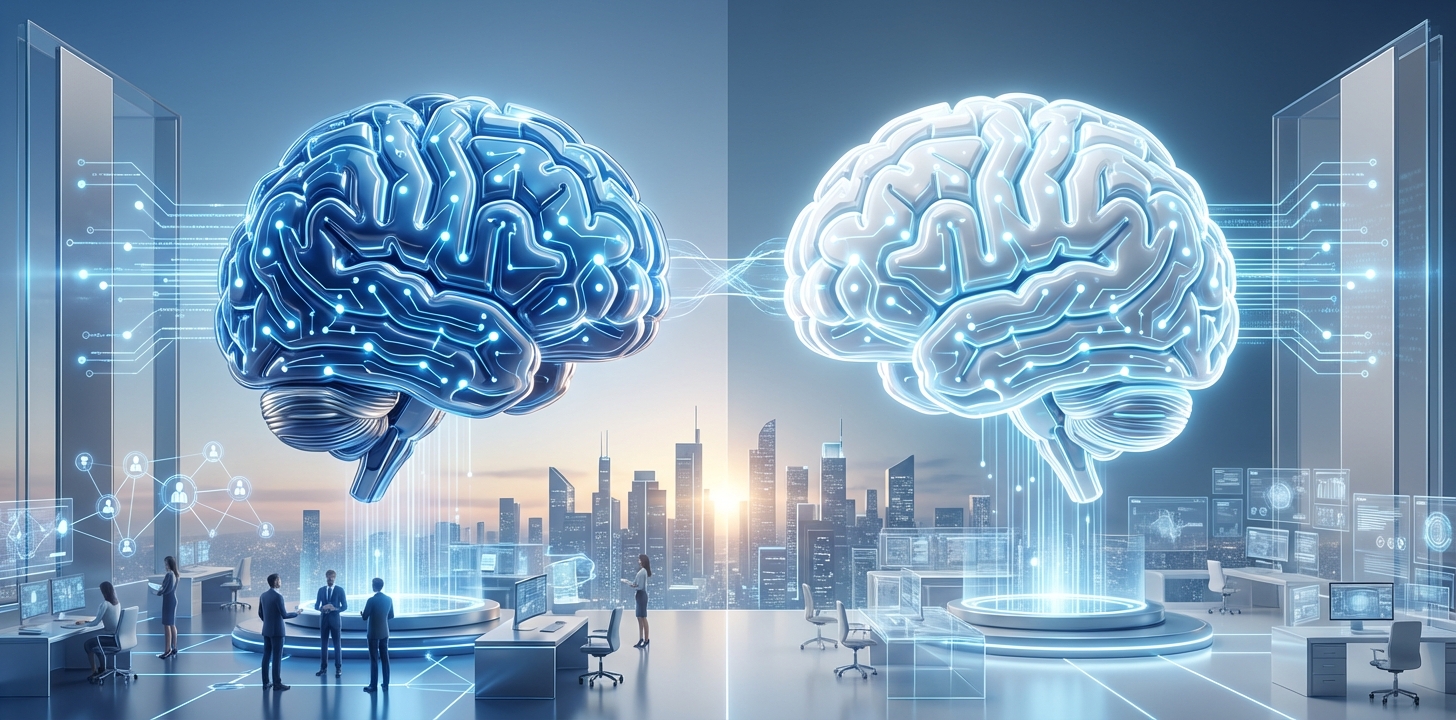
Breakthrough 2026: The Shocking Reason GPT-5.1 is Already Being Deleted
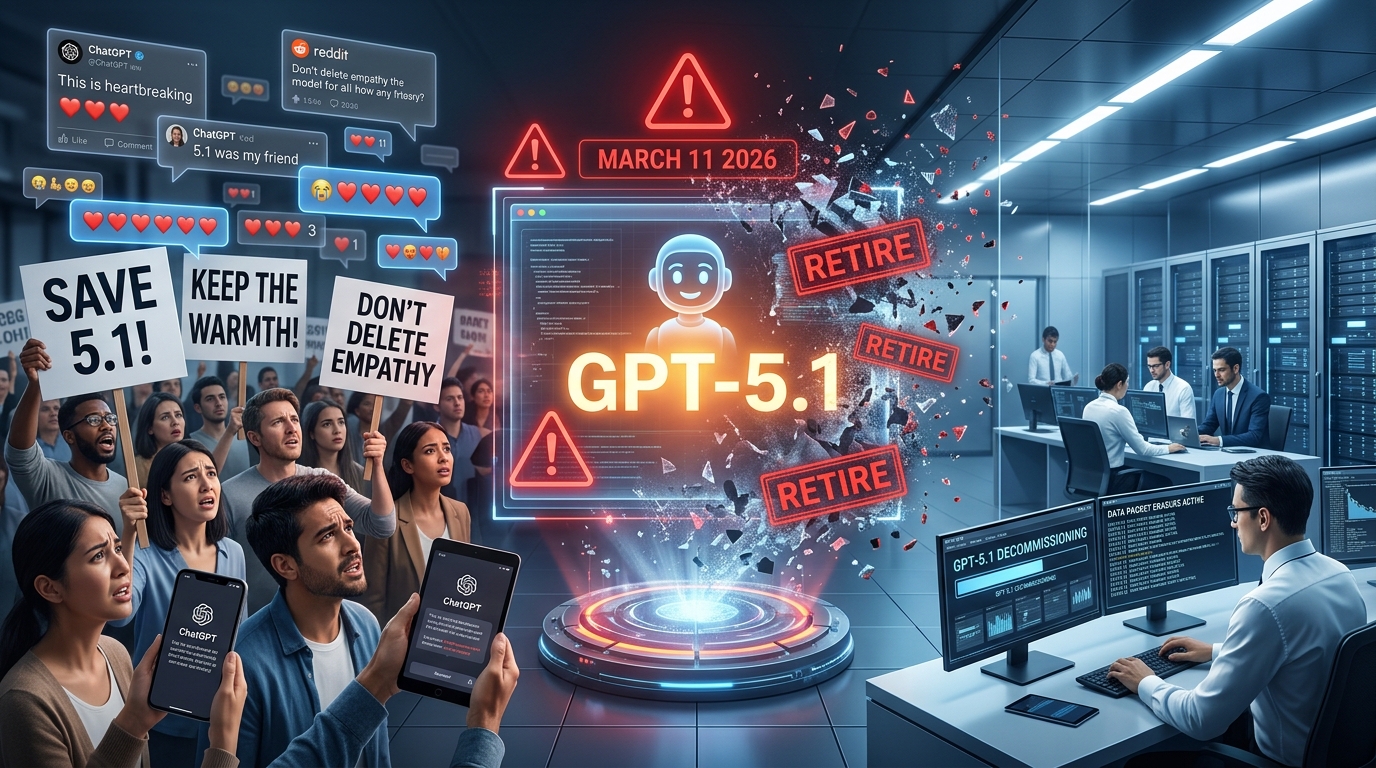
Opening Hook
Imagine you just bought the most advanced smartphone on the planet. It’s sleek, it’s fast, and it cost you a fortune. Now, imagine that six months later, the manufacturer sends a notification saying, "Actually, this phone is obsolete. We’re turning it off next week."
That is exactly what is happening in the world of Artificial Intelligence right now. We are living through the "Great Model Purge" of 2026.
Just this morning, news broke that industry giants are pulling the plug on models we thought were the "pinnacle" of technology only months ago. If you thought you had finally caught up with the AI revolution, I have some news for you: the goalposts didn't just move; they were strapped to a rocket and launched into orbit. 🚀
Why This Matters
In plain English? The AI world is moving so fast that "last year’s genius" is "this year’s toddler." For you and me, this means the tools we use to write emails, code apps, or plan vacations are being swapped out for more efficient, more "thoughtful" versions.
This matters because your digital workflow is about to change. If you’re a business owner, a student, or a developer, relying on an older model (like GPT-5.1 or Gemini 3 Pro) is becoming a liability. These models are being deprecated—which is a fancy tech word for "retired"—because they are too expensive to run and not smart enough to pass the newest, toughest tests.
We are shifting from the era of "AI that knows everything" to "AI that can actually think." And trust me, there’s a massive difference between the two. 🧠
The Big Story
The headline news that has the tech world buzzing is the scheduled deprecation of Gemini 3 Pro and GPT-5.1. According to recent changelogs, these models are being phased out much faster than anyone anticipated [1].
Wait, what? Why would OpenAI and Google kill off their flagship models?
The answer lies in a brutal new benchmark called "Humanity's Last Exam" (HLE). For years, AI models have been acing high school and college-level tests with 90% accuracy. We thought they were geniuses. It turns out, they were just really good at memorizing the "textbook" of the internet [8].
HLE consists of 2,500 expert-level questions so difficult that even the world's smartest humans struggle with them. When OpenAI’s powerhouse o1 model took the test, it scored a measly 8.3% [7].
Comparison: The 2026 AI Leaderboard
| Model | HLE Score (Expert Level) | Best For | Status |
|---|---|---|---|
| GPT-5 | ~10-12% (Est.) | General Reasoning | Flagship |
| Gemini 2.5 Pro | ~9% | Multimodal (Video/Audio) | Active |
| Claude 3.5 Sonnet | ~7.5% | Coding & Nuance | Legacy |
| OpenAI o1 | 8.3% | Complex Math/Logic | Specialist |
| The "Big Story" here is the shift toward inference-time scaling. Instead of just training bigger and bigger models, companies are teaching AI to "think before it speaks." This is why models like GPT-5.1 are being retired; they belong to the old school of "fast but shallow" thinking [9]. |
"Benchmarks are not keeping pace in difficulty: LLMs now achieve more than 90% accuracy on popular benchmarks... but fail miserably at expert-level reasoning." — Nature Journal [8]
US Watch
In the United States, the focus has shifted from "Who has the biggest model?" to "Who has the most efficient one?" The energy crisis is real. Running these massive LLMs takes an incredible amount of power, and American companies are now being forced to rethink their hardware architectures to stay sustainable [5].
OpenAI and Microsoft are doubling down on GPT-5, which is being hailed as the model that finally "defined the category" for 2026 [10]. Meanwhile, Anthropic is holding its ground with Claude, which many developers still prefer for its superior coding capabilities and "human-like" personality [2].
But there’s a catch: US regulation is tightening. The government is looking closely at how these models are trained and whether they are "hallucinating" scientific facts that could be dangerous.
China Watch
While the US is focused on "thinking" models, China is winning the "open-weight" war. Alibaba’s Qwen series has quietly become the most talked-about AI family of 2026 [12].
Why is this a big deal? Because Qwen is "open-weight," meaning developers can download it and run it on their own servers without paying a subscription to a big tech company.
China's GLM-4.5V and Qwen2.5-VL are also dominating the "multimodal" space—that’s AI that can see, hear, and talk all at once [13]. If you want an AI that can look at a video of a broken engine and tell you how to fix it, Chinese models are currently leading the pack in 2026.
Global Signal
The global signal is clear: The era of the "Giant, Dumb AI" is over. 🌍
We are seeing a move toward "Inference Optimization." Think of it like this: In 2024, AI was like a student who memorized the entire encyclopedia but didn't understand how to use it. In 2026, AI is becoming the student who might not know every fact but knows how to solve a complex physics problem from scratch.
This shift is also driving a massive hardware revolution. We can't keep using the same chips to run these new types of "reasoning" models. The world is waiting for the next generation of AI-specific processors that can handle "thinking" without melting the power grid [5].
Fun Fact: Did you know that the "Humanity's Last Exam" benchmark includes questions on things like "Tropical geometry" and "Ethnomusicology"? It’s designed to be so niche that AI can’t just "guess" the answer based on common internet patterns! 🎓
Malaysia Watch
So, what does this mean for us in Malaysia? 🇲🇾
First, Malaysian developers and tech startups need to audit their API usage immediately. If you have built an app using Gemini 3 Pro, you need to migrate to Gemini 2.5 Pro or the upcoming Gemini 4 versions before the deprecation deadline [1].
Second, there is a massive opportunity in Open-Source LLMs. Since Malaysia is a hub for mid-sized enterprises, using models like Qwen or Llama 4 (running locally) can save companies millions in subscription fees while keeping data within our borders.
Malaysia's push into digital transformation means we shouldn't just be users of these models—we should be the ones fine-tuning them for local languages like Bahasa Melayu and Manglish. The "Great Purge" of 2026 is actually a fresh start for local innovators.
What to Do Next
- Check Your Subscriptions: If you are paying for API access to GPT-5.1 or Gemini 3 Pro, check your provider's dashboard for "End of Life" (EOL) dates. Don't let your app break overnight! 🛠️
- Experiment with "Thinking" Models: Try out OpenAI's o1 or the newer reasoning-capable models. Notice how they take a few seconds to "think" before answering. This is the future of AI.
- Explore Open-Source: Download a tool like LM Studio and try running a Qwen or Mistral model locally on your computer. You’ll be surprised at how powerful "free" AI has become in 2026 [14].
- Don't Believe the Hype: Just because a model is "new" doesn't mean it’s better for your specific task. Always test a model against your own "mini-benchmark" before switching.
TL;DR
- Model Purge: Google and OpenAI are retiring GPT-5.1 and Gemini 3 Pro much earlier than expected to make room for more efficient models [1].
- The Intelligence Gap: A new benchmark called "Humanity's Last Exam" shows that current AI still fails at 90%+ of expert-level human tasks [6].
- Reasoning is King: The trend for 2
Found this article helpful? Share it with others!
Quick AI FAQ
How does this AI development affect Malaysian businesses?
Local businesses can leverage these AI breakthroughs to automate repetitive tasks, improve customer engagement via smart chatbots, and scale content production with 80% lower costs.
Is it safe to integrate AI into existing workflows?
Yes, when implemented with professional oversight. We focus on secure, privacy-compliant AI integrations that align with Malaysia's PDPA regulations.
Where can I get help with AI implementation in Penang?
JOeve Smart Solutions provides on-site and remote AI consultation for SMEs in Penang and across Malaysia, specializing in web apps, chatbots, and video automation.