Revealed: The Shocking AI Shift of 2026 and Your New Robot Boss
Revealed: The Shocking AI Shift of 2026 and Your New Robot Boss
Imagine waking up on a Tuesday morning in mid-2026. You haven't checked your email yet, but your AI agent already has. It noticed a flight delay for your business trip, rescheduled your airport pickup, sent a polite "running late" note to your first appointment, and even negotiated a partial refund for the flight.
You didn't type a single prompt. You didn't even ask. This is the world of "Agentic AI," and if 2024 was the year of the chatbot, 2026 is officially the year of the Agent. We are moving past the era where we "use" AI and into an era where AI "acts" on our behalf. 🤖
Why This Matters
For the last few years, we’ve been impressed by AI’s ability to write poems or generate images. That was "Generative AI." It was like having a very smart encyclopedia that could also paint. But it was passive; it sat there waiting for you to tell it exactly what to do.
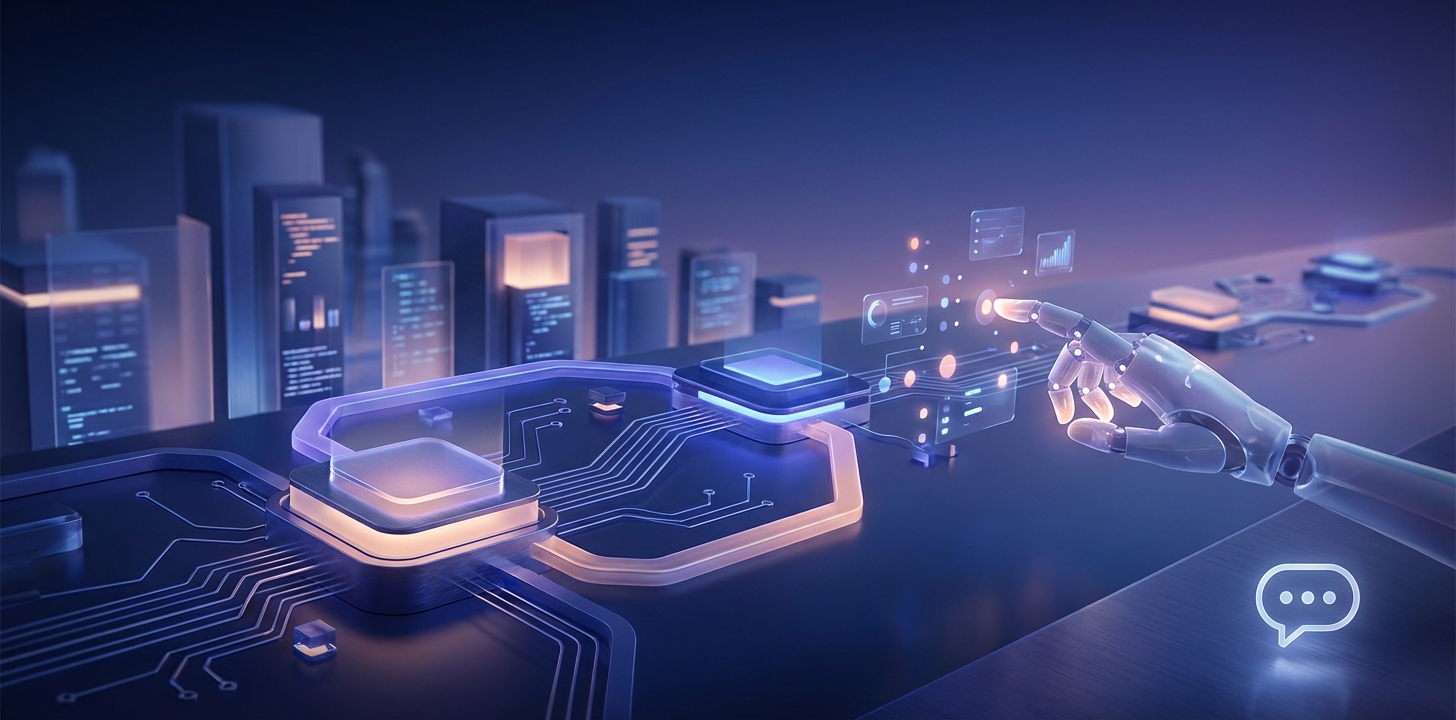
Agentic AI is different. It’s like moving from a calculator to a dedicated personal assistant. These systems can understand a high-level goal—like "organize my travel"—and then break that down into a dozen smaller steps, executing them across different apps without you holding its hand [1].
This matters because it solves the "blank page" problem. You no longer need to be a "prompt engineer" to get results. In 2026, the AI understands the context of your life and your business. It’s the bridge between "knowing" and "doing," and it’s about to change your 9-to-5 forever.
The Big Story
The headline for 2026 is the death of the standalone app and the birth of the "Orchestrator." Leading the charge is the massive shift from simple automation to autonomous workflows. Companies aren't just looking for a tool that can summarize a meeting; they want a system that attends the meeting, assigns the tasks, and follows up with the team until the job is done [5].
Zoom is a prime example of this evolution. Their AI Companion 3.0 has expanded into a full-scale agentic platform. It’s no longer just a video tool; it’s an orchestrator that can manage custom agents to handle complex enterprise workflows [5]. Think of it as the "brain" of your office, connecting your calendar, your messages, and your project management tools into one seamless flow.
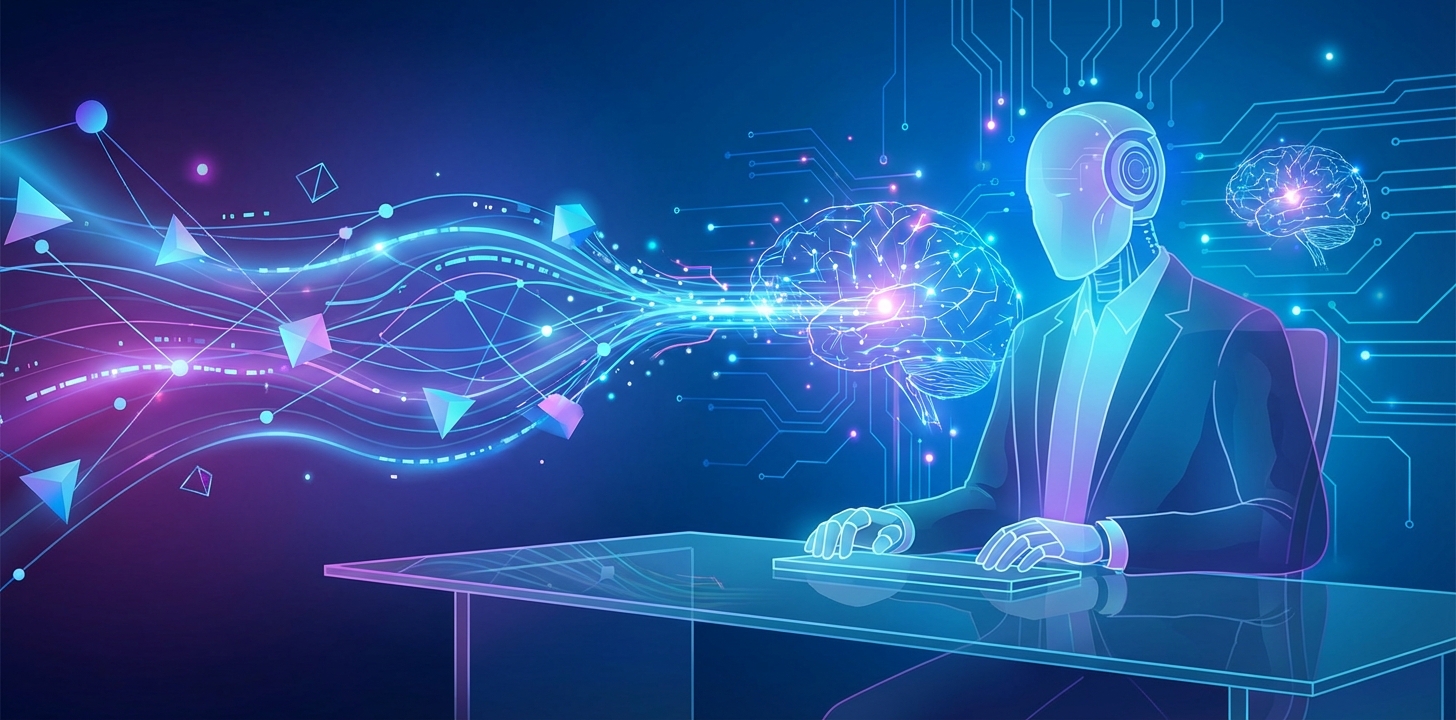
But wait, what? Does this mean we're losing control? Not exactly. The "Agentic Loop" involves four stages: Observe, Think, Act, and Learn. In 2026, these agents are being built with "guardrails" that allow them to make decisions within a specific budget or set of rules, but they’ll still flag "high-stakes" decisions for human approval [15].
| Feature | Generative AI (2023-2024) | Agentic AI (2025-2026) |
|---|---|---|
| User Input | Detailed, specific prompts | High-level goals/objectives |
| Output | Text, code, or images | Actions, transactions, completed tasks |
| Autonomy | Zero (Waits for user) | High (Can operate independently) |
| Context | Single-session memory | Long-term memory and app integration |
| Example | ChatGPT writing an email | An agent managing your entire inbox |
| The marketplace for these agents is exploding. Tools like Gumloop, Zapier, and n8n have evolved from simple "if this, then that" connectors into sophisticated AI workflow builders [8]. We are seeing a "low-code" revolution where anyone—not just developers—can build a digital worker to handle their boring chores [7]. |
"Agentic AI is moving beyond simple automation. These autonomous systems can now manage complex workflows, creating new opportunities and risks for businesses." — Forbes Analysis [4]
US Watch
In the United States, the focus has shifted heavily toward national security and enterprise-grade reliability. The U.S. government and major corporations are using Agentic AI to optimize supply chains that are critical to national interests [3].
We’re seeing AI agents simulate operational dangers for the military and aid in mission planning by running millions of "what-if" scenarios in seconds. On the consumer side, the battle of the titans continues. ChatGPT, Gemini, and Claude have all released "Agentic" versions of their models. While ChatGPT focuses on being a versatile "everything agent," Claude is carving out a niche as the "coding and precision agent," and Gemini is leveraging its massive Google Workspace integration to be the ultimate office assistant [11]. 🇺🇸
China Watch
While the US dominates the consumer "assistant" space, China is doubling down on "Industrial Agents." The focus in Beijing and Shenzhen is on integrating Agentic AI into the manufacturing floor and the logistics grid.
Chinese tech giants are developing agents that don't just plan schedules but actually manage robotic arms in factories with minimal human oversight. They are aiming for "Dark Factories" (fully autonomous, no lights needed because no humans are there) powered by agentic logic. There is a massive push to ensure these agents can run on domestic hardware, reducing their reliance on Western chips as they scale their autonomous infrastructure. 🇨🇳
Global Signal
Globally, we are entering what experts call the "Decade of Agentic Transformation" [2]. This isn't just a tech trend; it's an economic shift. When AI can perform tasks, the cost of "labor" for digital work drops toward zero.
This creates a massive opportunity for small businesses to compete with giants. A three-person startup in 2026 can have the operational "manpower" of a 50-person company by deploying a fleet of specialized agents for marketing, customer support, and bookkeeping [12]. However, it also raises urgent questions about job displacement and the need for new "AI Governance" laws worldwide. 🌍
Malaysia Watch
For Malaysia, the 2026 AI shift is a golden opportunity to leapfrog in digital service exports. As a hub for shared services and outsourcing (BPO), Malaysia is perfectly positioned to transition from "providing human labor" to "managing AI agent fleets."
Local SMEs are increasingly adopting low-code tools like Zapier and n8n to automate their operations, allowing them to scale without the massive overhead usually required in the region [9]. The Malaysian government’s focus on digital transformation aligns perfectly with this. We might see "Agentic Hubs" popping up in Cyberjaya, where the next generation of "AI Supervisors" are trained to manage autonomous systems for the global market. 🇲🇾
Did You Know?
The term "Agentic" comes from the word "Agency." In philosophy, agency is the capacity of an actor to act in a given environment. By 2026, we’ve officially given our software "agency"—the power to make choices. 💡
What to Do Next
- Audit Your Chores: Identify three repetitive tasks you do every day (like data entry or scheduling). These are the first things you should delegate to an agentic tool like Zapier or Gumloop [8].
- Experiment with "Gigi" or similar: Look into personal AI assistants like Sintra AI’s Gigi for personal growth, meal planning, and workout routines to get a feel for how agents handle multi-step goals [10].
- Learn "Goal-Setting," Not "Prompting": Shift your mindset. Instead of learning how to write the perfect sentence for an AI, practice defining clear business objectives and "guardrails."
- Stay Human: As agents take over the "doing," your value lies in "deciding." Focus on high-level strategy, creativity, and empathy—things agents still struggle with in 2026.
TL;DR - The Shift: 2026 is the year AI moves from "talking" (Generative) to "doing" (Agentic) [1].
- The Tools: Platforms like Zoom, Zapier, and n8n are becoming "orchestrators" that manage autonomous workflows [5].
- The Impact: This revolution allows small teams to act like large corporations, but it requires a new focus on AI governance and oversight [12].
- The Goal: Use agents to clear your "boring" plate so you can focus on the work that actually requires a human brain.
#AI #LLM #AIAgents #AITools #ChinaAI #USAi #AgenticAI #FutureOfWork #Automation2026 #TechTrends #Productivity #SmartTech #DigitalTransformation
Found this article helpful? Share it with others!
Quick AI FAQ
How does this AI development affect Malaysian businesses?
Local businesses can leverage these AI breakthroughs to automate repetitive tasks, improve customer engagement via smart chatbots, and scale content production with 80% lower costs.
Is it safe to integrate AI into existing workflows?
Yes, when implemented with professional oversight. We focus on secure, privacy-compliant AI integrations that align with Malaysia's PDPA regulations.
Where can I get help with AI implementation in Penang?
JOeve Smart Solutions provides on-site and remote AI consultation for SMEs in Penang and across Malaysia, specializing in web apps, chatbots, and video automation.