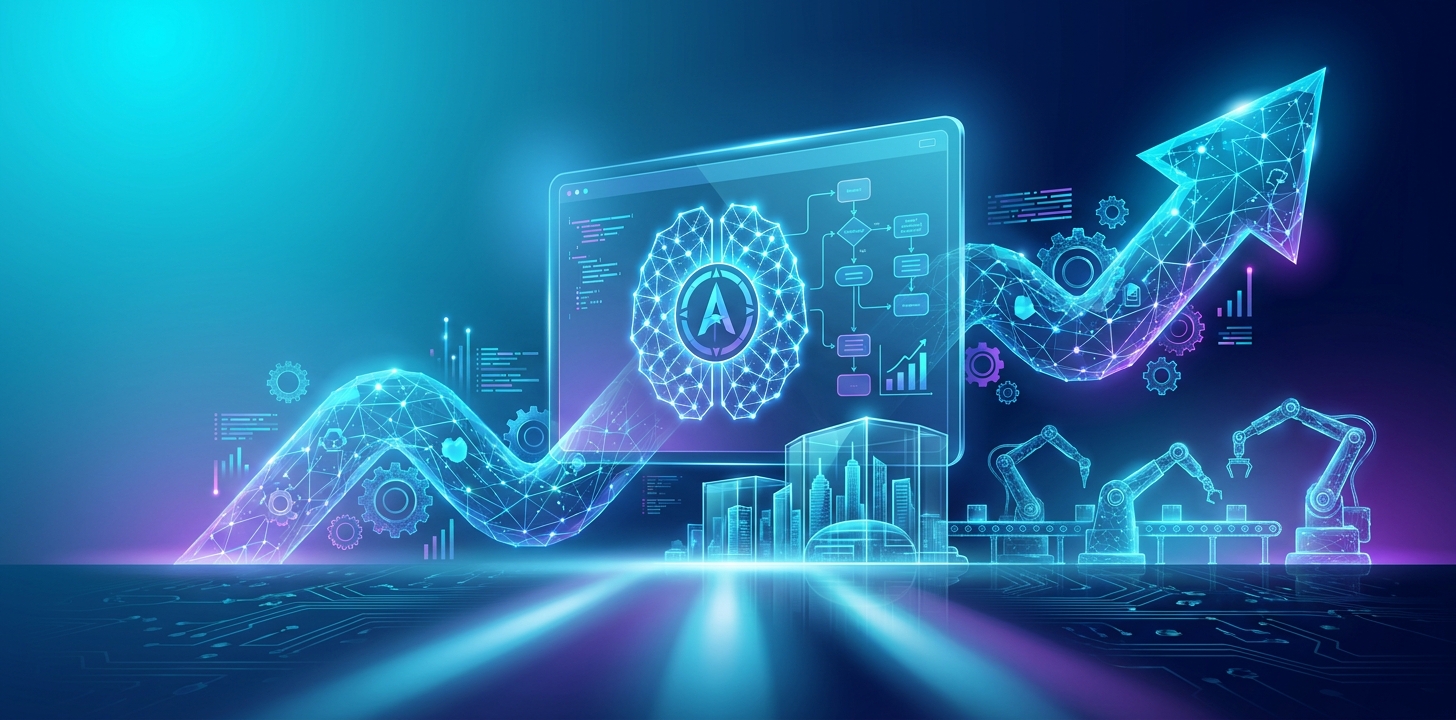
Tutorial: Master Secure AI Workflows in 2026 Like the Pentagon
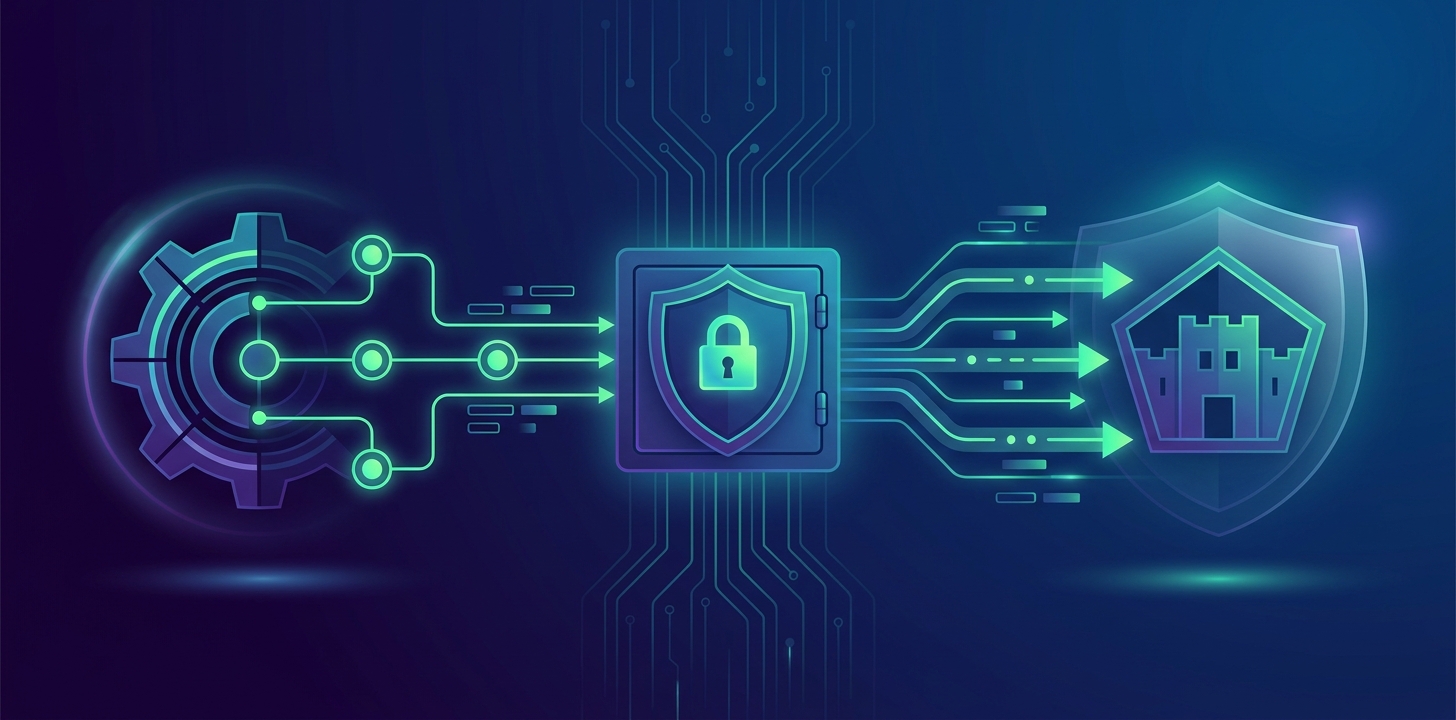
Tutorial: Master Secure AI Workflows in 2026 Like the Pentagon
The news coming out of Washington and Silicon Valley this morning is a tectonic shift for the global economy. The Pentagon has officially inked classified deals with seven AI giants—including OpenAI, Google, Microsoft, and Nvidia—to transform the U.S. military into an "AI-first" fighting force. While the headlines focus on national security, the underlying message for business leaders is clear: The era of "experimenting" with AI is over. We have entered the era of Applied AI Industrialization.
If the Department of Defense is comfortable moving classified data into OpenAI’s and Google’s ecosystems, the "security excuse" for your business has officially evaporated. The tools are ready. The infrastructure is here. The only question is whether your business is still running on 2024 manual processes while your competitors are building 2026 AI "Superfactories."
Why This Matters
The Pentagon's move signals that AI has reached a "Military-Grade" maturity level. For a professional audience, this matters for three reasons:
- Trust Infrastructure: When companies like OpenAI and Google agree to "any lawful use" for the military, they are building the most secure, robust versions of their models ever created. These security protocols will trickle down to enterprise versions (like ChatGPT Team/Enterprise and Gemini Business).
- The Rise of the "AI-First" Mandate: Just as the military is mandating AI-first operations, VCs in Silicon Valley are now prioritizing "lean" startups that replace massive hiring with AI agents. If you aren't AI-first, you are high-overhead and high-risk.
- Hardware Acceleration: Nvidia’s launch of the "Rubin" platform means the computational power available to your business is about to jump by a factor of 10x. We are moving from "chatbots" to "autonomous agents" that can run your entire supply chain.
Step-by-Step Guide: Building Your 2026 AI Business Superfactory
Inspired by the Pentagon's shift and Nvidia’s new "Superfactory" model, here is a practical tutorial on how to move your business from basic AI usage to a fully automated, high-output system.
Step 1: Audit for "Agentic" Potential
In 2026, we don't just use AI to write emails; we use AI Agents. An agent doesn't just talk; it acts.
- Action: List your top 5 most repetitive, data-heavy workflows (e.g., invoice processing, lead qualification, customer support, or market research).
- The Goal: Identify which of these can be handled by an "Agentic Workflow" where the AI has the authority to browse the web, use your internal tools, and execute tasks without a human "prompting" every step.
Step 2: Choose Your "Classified" Stack
The Pentagon news shows a split in the market. OpenAI and Google are the "utility" players (wide use), while Anthropic is positioning itself as the "ethical/safe" alternative (though currently feuding with the DOD).
- For High Speed/General Tasks: Use OpenAI (GPT-5/6) or Google Gemini 2.0.
- For High Security/Coding/Logic: Use Anthropic Claude 4 (especially with their new Wall Street-backed joint ventures).
- For Local/Private Data: Use NVIDIA AI Enterprise to run open-source models (like Llama 4) on your own hardware to keep data 100% in-house.
Step 3: Implement RAG (Retrieval-Augmented Generation)
Don't just use the base model. The "Pentagon way" involves feeding the AI specific, classified data. For your business, this means your proprietary data is your "moat."
- Tutorial Tip: Use tools like Openclaw or Hermes AI Agent to "vectorize" your company’s PDFs, emails, and SOPs.
- Result: When you ask your AI a question, it answers based on your company’s history, not the general internet.
Step 4: Deploy "Digital Twins" for Strategy
Following the Nvidia and Microsoft "AI Superfactory" integration, businesses can now create digital twins of their operations.
- How-to: Use AI to simulate business decisions. "What happens if we raise prices by 10% in the Northern region?"
- Tooling: Use Microsoft Azure AI Infrastructure to run simulations before you commit real-world capital.
"Did you know?" Sidebar
Did you know that AI startups in Silicon Valley are now reaching $100M valuations with fewer than 10 employees? By using "AI Agents" for coding, marketing, and HR, the 'Headcount-to-Revenue' ratio has been completely disrupted.
Strategic Breakdown: The 2026 Competitive Landscape
| Feature | OpenAI / Google (Pentagon Choice) | Anthropic (The Specialist) | Nvidia (The Architect) |
|---|---|---|---|
| Focus | Mass-scale, multimodal, government-ready. | Safety-first, heavy logic, financial sector. | Hardware, digital twins, supercomputing. |
| Best For | Daily productivity & general ops. | High-stakes legal/financial analysis. | Manufacturing, logistics, & heavy data. |
| 2026 Outlook | Ubiquitous "OS" for business. | The "Gold Standard" for private JV's. | Controls the "Oxygen" (Chips/Rubin). |
US & Global Watch
The "Big Tech-Military" alliance is the story of the year. The Pentagon's decision to blacklist Anthropic (temporarily) while doubling down on Google and OpenAI shows that execution speed beats theoretical safety in 2026.
Meanwhile, Silicon Valley is moving toward "Applied AI." The era of "AI Coachella"—where students and founders treat AI like a rockstar event—is transitioning into "AI Industrialization." We are seeing massive funding rounds for startups like Cognition ($500M) that don't just provide a chat interface but provide an AI "worker" that can replace a mid-level software engineer.
Key Expert Quote:
"The Pentagon's shift to 'AI-First' is the final signal that AI is no longer a 'tech' story—it is a 'sovereignty' and 'survival' story. For businesses, the message is: Automate or be out-competed by those who do." — Senior Analyst, Silicon Valley Insights.
Malaysia Watch
For Malaysia, the Pentagon's "AI-First" pivot and Nvidia's "Rubin" launch present a massive opportunity. Malaysia is already a hub for semiconductor packaging and testing.
- Data Center Hub: With the massive energy demands of the Rubin platform, Malaysia’s investments in Johor and Cyberjaya are perfectly timed. We are becoming the "Powerhouse" for the region's AI compute.
- SME Opportunity: The Malaysian government’s focus on "AI for Rakyat" and SME digitalization grants means local businesses can subsidize their move to these 2026 tools.
- The "Zhipu & Alibaba" Factor: While the US military goes with OpenAI, many Malaysian businesses are looking toward Zhipu AI and Alibaba’s Qwen for cost-effective, localized AI solutions. This "Multi-LLM" strategy is unique to Southeast Asia and allows Malaysian firms to be more flexible than US-only firms.
What to Do Next
- Audit Your Tech Stack: Stop paying for 10 different SaaS tools that don't talk to each other. Look for "Agent-ready" platforms that can integrate with OpenAI's or Google’s API.
- Secure Your Data: If the Pentagon can handle classified data on these models, you can too—if you use Enterprise-grade encryption. Move your team off "Free" ChatGPT and onto "Team" or "Enterprise" today.
- Hire for "AI Orchestration": Stop looking for "Content Writers" or "Data Entry" clerks. Start hiring "AI Orchestrators"—people who know how to build and manage a fleet of AI agents.
- Experiment with Local LLMs: If you have sensitive client data, download an open-source model and run it on an Nvidia-powered workstation. See how it performs compared to the cloud.
TL;DR
- The Big News: The Pentagon has signed classified deals with OpenAI, Google, and Nvidia, marking the start of the "AI-First" military era.
- The Shift: Silicon Valley is moving from "General AI" to "Applied AI Agents" that replace headcount and drive 10x efficiency.
- The Strategy: Businesses must build "AI Superfactories" using RAG and autonomous agents to stay competitive in 2026.
- Malaysia’s Role: Malaysia is uniquely positioned as a regional AI power hub, offering a bridge between Western and Eastern AI ecosystems.
#AI #BusinessGrowth #DigitalTransformation #Tutorial #AIAgents #AITools #OpenAI #Nvidia #Anthropic #MalaysiaAI #PentagonAI #FutureOfWork #2026Strategy
Found this article helpful? Share it with others!
Quick AI FAQ
How does this AI development affect Malaysian businesses?
Local businesses can leverage these AI breakthroughs to automate repetitive tasks, improve customer engagement via smart chatbots, and scale content production with 80% lower costs.
Is it safe to integrate AI into existing workflows?
Yes, when implemented with professional oversight. We focus on secure, privacy-compliant AI integrations that align with Malaysia's PDPA regulations.
Where can I get help with AI implementation in Penang?
JOeve Smart Solutions provides on-site and remote AI consultation for SMEs in Penang and across Malaysia, specializing in web apps, chatbots, and video automation.