India's AI Summit: Global South Takes Center Stage
India's AI Summit: Global South Takes Center Stage (And Why Malaysia Should Care)
Today marks a historic moment in the global AI race—and it's not happening in Silicon Valley or Beijing.
India is hosting the AI Impact Summit 2026 from February 16-20 at Bharat Mandapam in New Delhi, marking the first major international AI summit in the Global South. [1]
With 40+ CEOs from the world's biggest tech companies, 20+ heads of state, and over 850 exhibitors, this isn't just another tech conference. It's a statement that the AI conversation is expanding beyond the US-China duopoly.
Here's what's happening and what it means for Malaysia.
Why This Matters (In 60 Seconds)
The big picture: Until now, global AI governance has been dominated by the US and China. India's summit shifts the conversation to the Global South—regions that will be most affected by AI but have had the least say in how it's developed and regulated.
The numbers:
- 100 million weekly ChatGPT users in India (second largest after US) [4]
- Largest student user base of ChatGPT in the world [4]
- 850+ exhibitors showcasing AI products and solutions [5]
- 500+ events during the summit [4]
The attendees: Google CEO Sundar Pichai, OpenAI CEO Sam Altman, Anthropic CEO Dario Amodei, Mistral AI co-founder Arthur Mensch, Zoho CEO Sridhar Vembu, and dozens more. [4]
The theme: "People, Planet, and Progress" (Sarvajana Hitaya, Sarvajana Sukhaya - welfare for all, happiness for all) [4]
This matters because it signals a shift from "AI principles" to "AI deployment"—moving from theoretical discussions to real-world implementation.
Malaysia Watch: The ASEAN Opportunity
While India takes the spotlight, Malaysia has been quietly positioning itself as ASEAN's AI anchor.
Recent developments:
Asia AI Infrastructure Summit 2026 happened in Kuala Lumpur on February 11, bringing together policymakers and tech giants like Microsoft, Alibaba Cloud, and NTT DATA. [6]
Budget 2026 committed RM5.9 billion to research, development, commercialization, and innovation—with AI as a national strategic priority. [8]
National AI Office (NAIO) is establishing specialized working groups to drive Malaysia's AI agenda across technology, academia, industry, and government. [9]
First Bahasa Malaysia AI model is in development as part of the country's digital sovereignty push. [8]
The strategic opportunity:
India's summit creates a platform for Global South cooperation. Malaysia should be at that table—not just as an observer, but as a partner.
What Malaysian organizations should do:
- Engage with India's AI ecosystem through bilateral partnerships
- Position Malaysia as the bridge between India and ASEAN for AI collaboration
- Leverage India's focus on "AI for development" to address shared challenges in agriculture, healthcare, and education
The contrarian take:
While everyone's focused on US-China AI competition, the real story is the rise of the Global South. India, Indonesia, Malaysia, and other developing nations will be the largest consumers and beneficiaries of AI technology. Their voice in AI governance matters more than most people realize.
China Watch: The Chinese New Year AI War
While India hosts the summit, China's AI companies are engaged in what's being called "The Chinese New Year AI War"—giving away money and cars to promote their platforms. [11]
Recent Chinese AI releases:
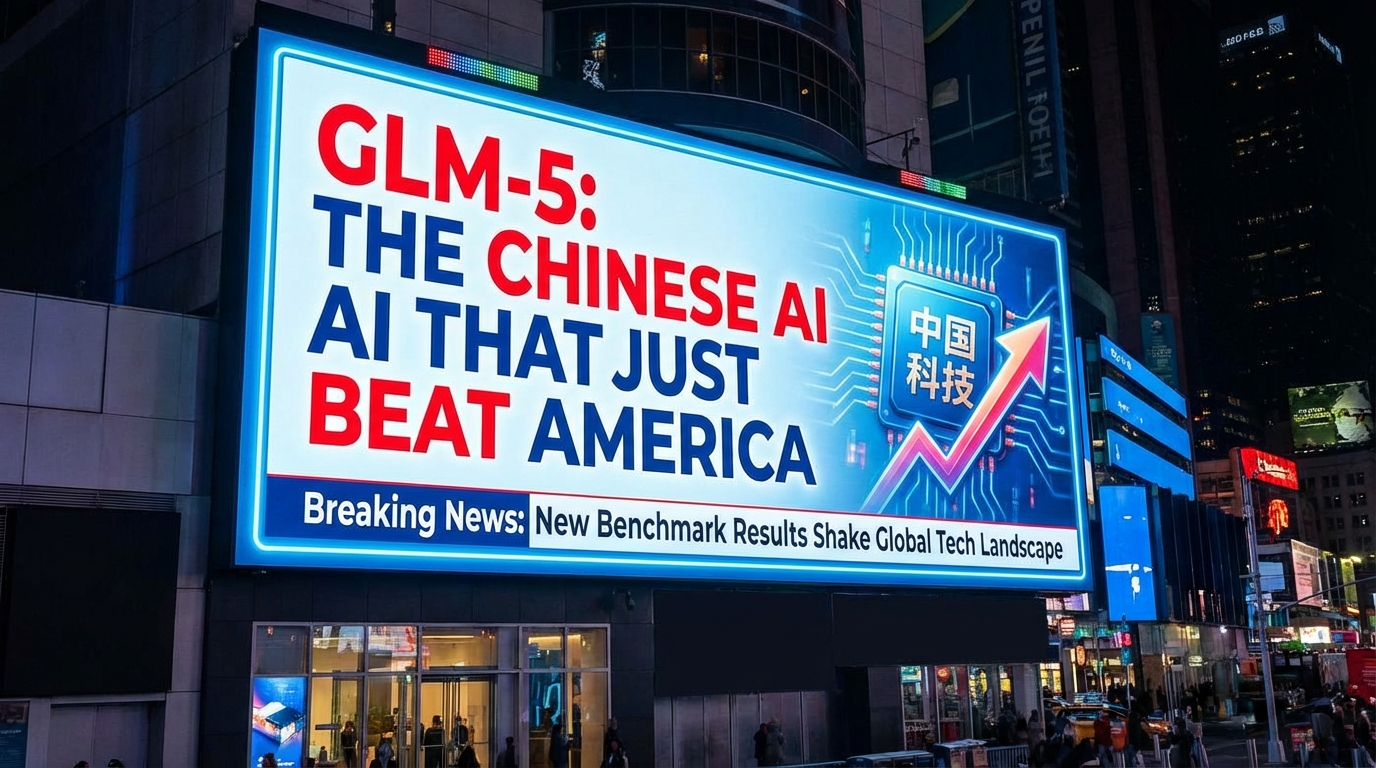
- Zhipu AI's GLM-5 (released Feb 11): 744-billion-parameter model trained on Huawei chips, rivaling Claude Opus [11]
- ByteDance's Seedance 2.0: Video generation model that went viral [10]
- Kuaishou's Kling 3.0: Competing with OpenAI's Sora in video generation [10]
The controversy:
OpenAI has accused DeepSeek of "distilling" US models—using ChatGPT and other American AI to train their own systems. [13]
The technique, called "distillation," involves having an older, more powerful AI model evaluate the quality of answers from a newer model—effectively transferring learnings from one system to another.
Why this matters for Malaysia:
This raises questions about intellectual property, data sovereignty, and the ethics of AI development. Malaysian companies using Chinese AI models need to understand:
- Where the training data came from
- Whether the model could face legal challenges
- How to ensure compliance with international IP standards
US Watch: Regulatory Heat Intensifies
Back in the US, regulators are turning up the heat on Big Tech AI.
Recent developments:
FTC scrutinizing Microsoft over AI and cloud practices, questioning rivals about competitive concerns. [14]
Musk's Grok gaining US market share amid backlash over sexualized images, showing that controversy doesn't always hurt adoption. [14]
Anthropic raised $30 billion in its latest funding round, showing that investor appetite for top AI startups remains strong despite market volatility. [11]
The bigger picture:
2026 is becoming the year of AI regulation and litigation. Expect more:
- Antitrust investigations into AI platform dominance
- Lawsuits over AI-generated content and copyright
- State vs. federal battles over AI governance
For Malaysian companies working with US AI providers, this means:
- Compliance requirements will increase
- Costs may rise as providers pass on legal expenses
- Alternative providers (including Chinese and Indian companies) may become more attractive
What to Do Next (Practical Steps)
For Malaysian Businesses:
Watch India closely: The AI Impact Summit will shape global AI norms. Monitor announcements and partnerships that emerge from the event.
Explore Global South partnerships: India, Indonesia, Vietnam, and other developing nations are building AI ecosystems. Malaysian companies should engage early.
Diversify AI providers: Don't rely solely on US or Chinese AI. Explore Indian, European, and homegrown alternatives to reduce geopolitical risk.
For Government:
Engage with India's AI initiatives: Malaysia should be part of the Global South AI conversation, not just an observer.
Support local AI development: Budget 2026's RM5.9 billion commitment is a good start—ensure it translates into real infrastructure and talent development.
Prepare for regulatory divergence: US, EU, China, and India will have different AI regulations. Malaysian companies need guidance on navigating this complexity.
For Developers:
Learn from Indian AI models: India is building AI systems for diverse, multilingual populations—relevant experience for Malaysia's multicultural context.
Contribute to open-source AI: With Chinese open-source models spreading globally, Malaysian developers can contribute to and benefit from this ecosystem. [10]
Build for the Global South: AI solutions designed for US or Chinese markets may not fit Malaysian needs. Focus on local problems with local solutions.
The Contrarian Take (What Everyone's Missing)
Here's something most coverage is getting wrong:
Everyone's focused on the technology at India's summit—the CEOs, the products, the announcements.
But the real story is about governance.
India is positioning itself as a neutral broker in the US-China AI rivalry. With 20+ heads of state attending, this summit is as much about geopolitics as it is about technology.
For smaller nations like Malaysia, this creates an opportunity:
- Participate in a multipolar AI world rather than choosing sides
- Build partnerships with multiple AI ecosystems (US, China, India, EU)
- Influence global AI norms rather than just following them
The question isn't "which AI superpower will dominate?" The question is "how can smaller nations navigate a world with multiple AI powers?"
Watchlist: What to Keep an Eye On
Tomorrow (Feb 17):
- Major announcements from India's summit
- Public access to the AI Impact Expo begins
- Sessions on AI for agriculture, healthcare, and education
This Week:
- Outcomes from the Leaders' Plenary and GPAI Council Meeting
- Partnership announcements between Indian and Global South countries
- Market reaction to Chinese New Year AI promotions
This Month:
- Samsung Galaxy Unpacked (Feb 26) with deeper AI integration [7]
- Follow-up from Malaysia's Asia AI Infrastructure Summit
- More Chinese AI model releases and their global adoption
Bottom Line
India's AI Impact Summit 2026 marks a turning point: the Global South is no longer just a consumer of AI technology—it's becoming a shaper of AI governance.
For Malaysia, this creates both opportunity and responsibility:
- Opportunity to position itself as ASEAN's AI hub and a bridge between India, China, and the West
- Responsibility to ensure AI development serves all Malaysians, not just tech elites
The AI race is no longer just about who has the best technology. It's about who builds the most inclusive, sustainable, and beneficial AI ecosystems.
India is making its move. Malaysia should too.
Sources:
- Times of India (Feb 16, 2026): India AI Impact Summit 2026 Live Updates [1]
- Indian Express (Feb 16, 2026): India AI Impact Summit 2026 LIVE Updates [3]
- Times Now (Feb 16, 2026): AI Impact Summit 2026 LIVE [4]
- Business Standard (Feb 16, 2026): AI Impact Summit 2026 kicks off in Delhi [5]
- World Business Outlook (Feb 2026): Asia AI Infrastructure Malaysia Summit 2026 [6]
- Product Nation (Feb 2026): Samsung Galaxy Unpacked February 2026 Malaysia [7]
- British Council (Nov 14, 2025): Malaysia's Budget 2026 bets big on AI [8]
- Chambers Practice Guides (2025): Artificial Intelligence Malaysia [9]
- MIT Technology Review (Feb 12, 2026): What's next for Chinese open-source AI [10]
- CNBC (Feb 13, 2026): China's tech titans in Lunar New Year AI War [11]
- CNBC (Feb 14, 2026): Big week for AI models from China [12]
- Reuters (Feb 12, 2026): OpenAI accuses DeepSeek of distilling US models [13]
- Reuters (2026): AI News Latest Headlines [14]
Found this article helpful? Share it with others!
Quick AI FAQ
How does this AI development affect Malaysian businesses?
Local businesses can leverage these AI breakthroughs to automate repetitive tasks, improve customer engagement via smart chatbots, and scale content production with 80% lower costs.
Is it safe to integrate AI into existing workflows?
Yes, when implemented with professional oversight. We focus on secure, privacy-compliant AI integrations that align with Malaysia's PDPA regulations.
Where can I get help with AI implementation in Penang?
JOeve Smart Solutions provides on-site and remote AI consultation for SMEs in Penang and across Malaysia, specializing in web apps, chatbots, and video automation.