AI Revolution in 2026: Key Developments Shaping the Future
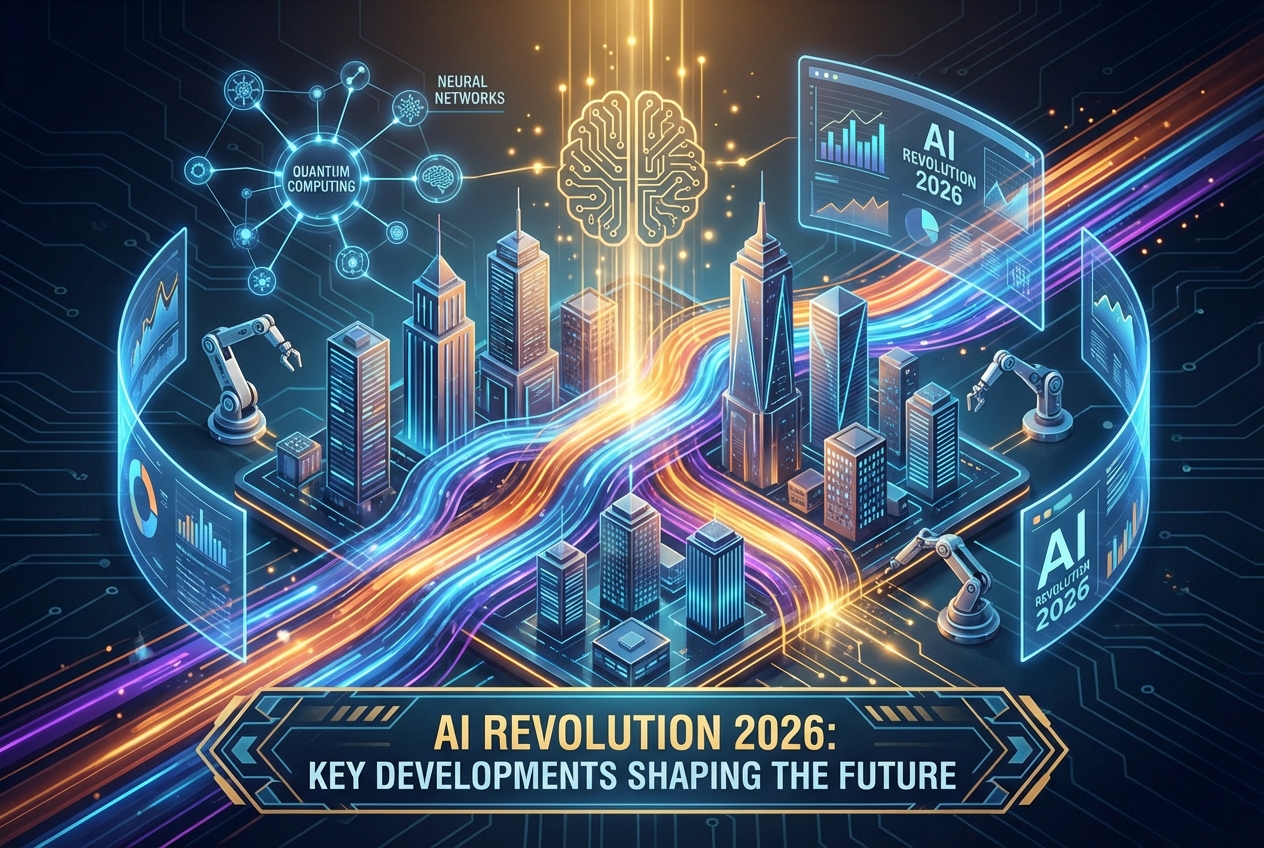
As we step into 2026, artificial intelligence continues its rapid evolution, marking a critical inflection point where AI moves from experimental technologies to practical, real-world applications. This January has brought significant developments that are reshaping how we interact with AI and its role across industries.
OpenAI's Major Announcements
GPT-5.2 Launch: OpenAI has released GPT-5.2, the next upgrade to the GPT-5 series. This model features enhanced capabilities with a more current understanding of the world, providing more accurate and useful answers with relevant examples and context even before web search is engaged.
ChatGPT Health: In a groundbreaking move, OpenAI introduced ChatGPT Health, a dedicated experience that securely brings health information together with AI intelligence. This feature allows users to connect medical records and wellness apps like Apple Health, MyFitnessPal, and Weight Watchers. The system is built with additional privacy and security protections specifically designed for health data, including purpose-built encryption and isolation to keep health conversations protected and compartmentalized.
AI Healthcare Breakthroughs
Stanford researchers have developed an AI system that can predict future disease risk using data from just one night of sleep. The technology analyzes detailed physiological signals, looking for hidden patterns across the brain, heart, and breathing patterns that humans might miss.
Another significant breakthrough comes from a generative AI system that can now analyze blood cells with greater accuracy and confidence than human experts, detecting subtle signs of diseases like leukemia that might otherwise go unnoticed.
The US-China AI Competition Intensifies
The competition for AI dominance between the United States and China has reached new heights in 2026:
China's Strategic Push: China is implementing its AI Plus initiative, which aims to embed AI across multiple sectors including industry, services, healthcare, and governance.
US Export Strategy: The United States is doubling down on exporting US tech stack as the cornerstone of its international AI strategy.
Southeast Asia's Growing Role: Countries like Malaysia, Thailand, and Vietnam are becoming hotspots for AI infrastructure investment.
AI Moves from Hype to Pragmatism
Industry experts predict that 2026 will be the year AI moves from hype to pragmatism. The focus is shifting away from building ever-larger language models toward making AI more usable in practice.
Chinese Open-Source AI Models Gain Traction
Chinese AI startup DeepSeek is expected to launch its next-generation V4 model in February, with internal tests suggesting strong performance in coding tasks compared to models from OpenAI and Anthropic.
Looking Ahead
2026 marks a critical year where AI transitions from ambitious experimentation to widespread adoption. For businesses and developers, the key takeaway is to focus on practical applications and real-world value.
Found this article helpful? Share it with others!
Quick AI FAQ
How does this AI development affect Malaysian businesses?
Local businesses can leverage these AI breakthroughs to automate repetitive tasks, improve customer engagement via smart chatbots, and scale content production with 80% lower costs.
Is it safe to integrate AI into existing workflows?
Yes, when implemented with professional oversight. We focus on secure, privacy-compliant AI integrations that align with Malaysia's PDPA regulations.
Where can I get help with AI implementation in Penang?
JOeve Smart Solutions provides on-site and remote AI consultation for SMEs in Penang and across Malaysia, specializing in web apps, chatbots, and video automation.