Shocking 2026 AI Reveal: How China Just Happened to Overtake the US
Opening Hook
Imagine waking up and realizing the most powerful AI in your pocket didn't come from a glass building in California, but from a startup in Hangzhou that you’d barely heard of a year ago. That’s exactly the "Wait, what?" moment Silicon Valley is having right now.
In early 2025, a Chinese startup called DeepSeek sent shockwaves through the tech world by releasing a model that was terrifyingly efficient and performed better than many US rivals [1]. Fast forward to 2026, and the "AI Race" isn't just a competition anymore—it’s a full-blown transformation of how we live, work, and even celebrate holidays. 🤖
Why This Matters
Why should you care if the AI you use is made in the US or China? Well, think of AI like the electricity of the 21st century. Whoever controls the most efficient "grid" wins the economic future. For years, we assumed the US was miles ahead, but recent data shows the gap has vanished.
In plain English: if China cracks the code on cheaper, faster, and more creative AI first, they become the global hub for innovation. This means the next "Uber" or "TikTok" won't just be an app; it will be an AI agent that manages your entire life, and it might be running on a Chinese backbone.
The Big Story
The biggest story right now is the "Lunar New Year AI Blitz." While most of the world was winding down for the holidays, Chinese tech titans like Alibaba, ByteDance, and Zhipu were busy launching a barrage of new models [2]. They didn't just release code; they bought the market.
To get users hooked, companies like ByteDance and Baidu burned through a staggering US$1.1 billion in subsidies, red packets, and vouchers over the Chinese New Year period [7]. It was a digital gold rush. Imagine if ChatGPT paid you $5 just to try its new voice mode—that’s the level of aggression we're seeing.
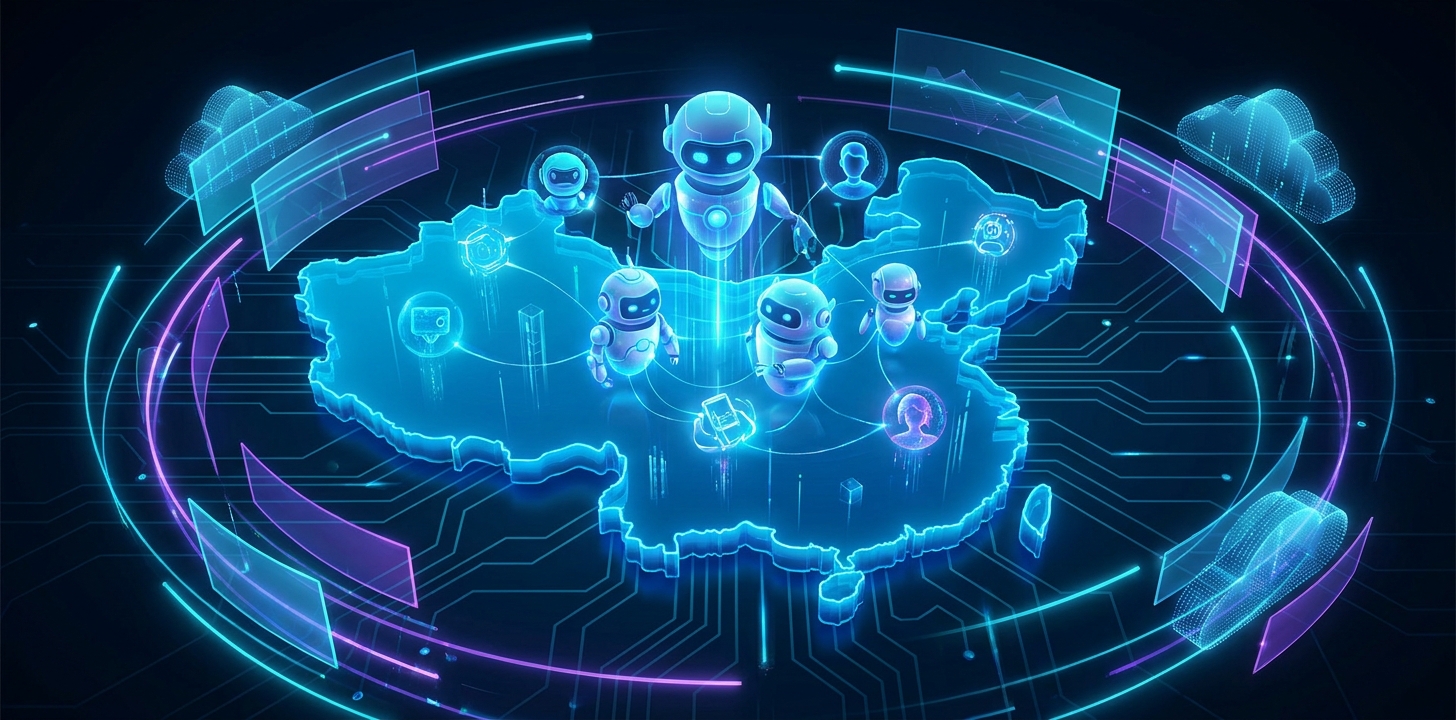
But here is what everyone is missing: it’s not just about the money. It’s about the "stack." Companies like Baidu and Tencent are now linking their AI models directly into cloud services and digital platforms, creating a seamless "integrated technology stack" that is incredibly hard for Western companies to penetrate [8].
"Chinese AI models seem to have caught up or even pulled ahead of their global rivals," states a recent report from Stanford University [4].
Feature US AI Strategy (OpenAI/Google) China AI Strategy (Baidu/Alibaba) Focus General Intelligence (AGI) Industry-specific & Efficiency Monetization Subscriptions (SaaS) Subsidies & Ecosystem Integration Hardware Nvidia GPUs (High Cost) Specialized Chips & Humanoid Integration Open Source Selective (Meta is outlier) Aggressive Open-Weight Ecosystem
US Watch
Across the Pacific, Silicon Valley is feeling the heat. For a long time, the US relied on its lead in high-end chips (like those from Nvidia) to stay ahead. However, the rise of "open-weight" models in China has changed the game. These are models where the "brain" of the AI is shared more freely, allowing developers to build on top of them quickly [5].
The US is currently pivoting. We are seeing a massive shift toward "AI Agents"—tools that don't just talk to you but actually do things, like booking flights or coding entire apps. But the "efficiency" of Chinese models like DeepSeek has forced US companies to stop just making "bigger" models and start making "smarter" ones.
China Watch
If you want to see the most "viral" part of this story, look at the robots. At the 2026 Spring Festival Gala, China’s humanoid robots didn't just stand there; they performed kung fu [10].
This isn't just for show. Unitree, a leading Chinese robotics startup, expects to ship between 10,000 and 20,000 humanoid units in 2026 alone [10]. While Tesla’s Optimus is still largely in the testing phase, Chinese companies like Agibot and UBTech are already winning the "early market" for shipments [11].
Fun Fact: China is now the global leader in AI research publications. They aren't just copying anymore; they are the ones writing the textbook [12]. 📚
Global Signal
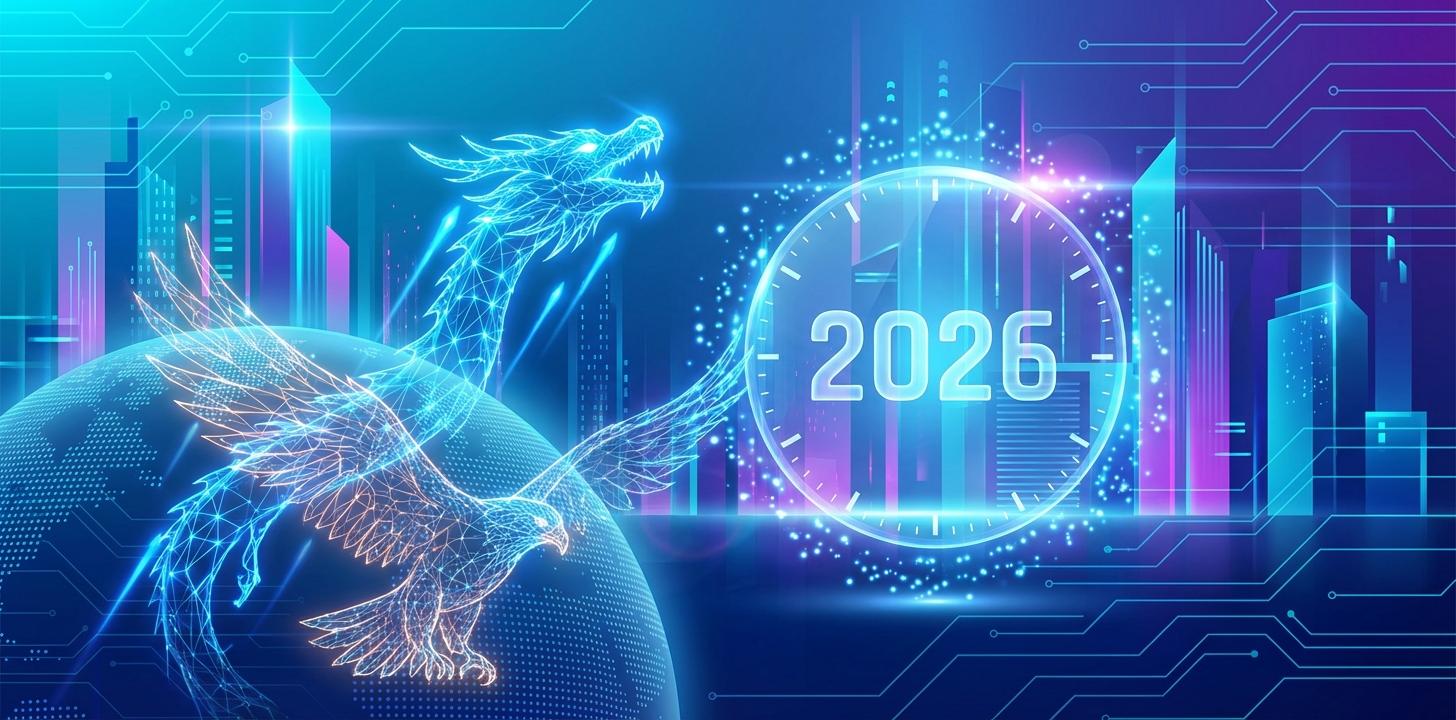
What does this mean for the rest of us? We are moving toward a "Bipolar AI World." You might soon have to choose between a "Western AI" ecosystem (Google/Apple/OpenAI) and an "Eastern AI" ecosystem (Alibaba/Tencent/ByteDance).
This competition is great for consumers because it drives prices down. However, it also creates a "fragmented internet." An AI tool that works perfectly in New York might not be allowed to "talk" to an AI tool in Shanghai. This "AI Iron Curtain" is the biggest risk to global productivity in 2026.
Malaysia Watch
For my friends in Malaysia, this is a massive opportunity. Malaysia has always been a "neutral" bridge between the East and the West. As both the US and China look for places to build data centers and test their AI agents, Malaysia’s digital economy is perfectly positioned.
- Investment Inflow: Expect more "mega-billions" in AI startup funding to flow into Southeast Asia as Chinese firms look to expand their "red packet" tactics globally [3].
- Manufacturing Hub: With Chinese humanoid robots going into mass production, Malaysia’s electronics manufacturing sector could become a key part of the robotic supply chain.
- Localized AI: There is a huge gap for AI that understands local languages (Malay, Mandarin, Tamil) and cultural nuances. 🇲🇾
What to Do Next
How do you stay ahead in this chaotic 2026 landscape? Here’s your game plan:
- Diversify Your Tools: Don't just stick to ChatGPT. Try out DeepSeek or Alibaba’s Qwen models. They are often faster and better at specific tasks like coding or math.
- Watch the "Humanoid" Space: If you’re an investor or business owner, start looking at how "physical AI" (robots) can automate your workflow. They are becoming affordable faster than we predicted.
- Learn "AI Orchestration": The real skill in 2026 isn't writing prompts; it’s knowing how to link different AI agents together to complete a complex project.
- Stay Skeptical of "Hype": Remember the $1 billion red packet battle? Many of those users might not stick around once the free money stops [6]. Focus on tools that provide real value, not just flashy rewards.
TL;DR
- China’s AI Catch-up: New reports show Chinese models have officially caught up to or surpassed US rivals in efficiency and performance [4].
- The Robot Revolution: Humanoid robots are hitting the mass market, with China leading in 2026 shipments (10k-20k units) [10].
- The $1 Billion Gamble: Tech giants are burning billions in subsidies to win the AI user war, creating a "red packet" frenzy [7].
- Global Impact: We are entering a "Bipolar AI" era, forcing users and countries to navigate two competing tech stacks.
#AI #LLM #AIAgents #AITools #ChinaAI #USAi #DeepSeek #Robotics #HumanoidRobots #TechNews2026 #Baidu #Alibaba #SiliconValley #FutureOfWork
Found this article helpful? Share it with others!
Quick AI FAQ
How does this AI development affect Malaysian businesses?
Local businesses can leverage these AI breakthroughs to automate repetitive tasks, improve customer engagement via smart chatbots, and scale content production with 80% lower costs.
Is it safe to integrate AI into existing workflows?
Yes, when implemented with professional oversight. We focus on secure, privacy-compliant AI integrations that align with Malaysia's PDPA regulations.
Where can I get help with AI implementation in Penang?
JOeve Smart Solutions provides on-site and remote AI consultation for SMEs in Penang and across Malaysia, specializing in web apps, chatbots, and video automation.