Shocking 2026 Breakthrough: China’s AI Giants Rival Silicon Valley

Opening Hook
Imagine waking up to find that the AI company your government spent hundreds of millions of dollars on was suddenly "blacklisted" overnight. That is exactly what happened this week as the US federal government abruptly canceled over $200 million in contracts with Anthropic, sending shockwaves through Silicon Valley [2].
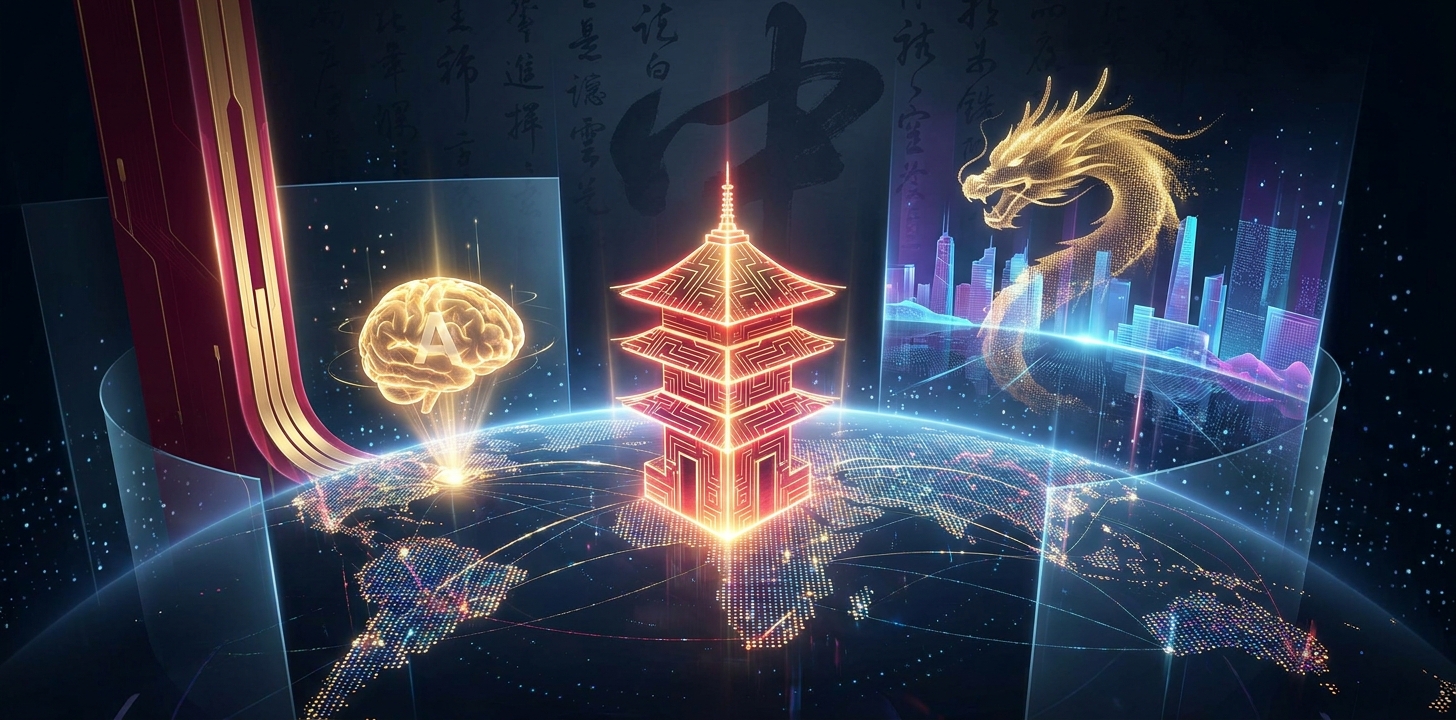
Wait, what? While the US is busy rearranging its domestic alliances, a sleeping giant has fully awakened. In the first quarter of 2026, the narrative has flipped. We used to talk about China "catching up." Now, with the rise of DeepSeek and a new generation of humanoid robots, we are forced to ask: Is the West actually falling behind in the efficiency race? 🤖
Why This Matters
This isn’t just about which chatbot can write a better poem. This is the "AI Cold War" entering its most volatile phase. For the average person, this matters because the tools you use for work, the cost of the products you buy, and even the security of your national data are being decided right now.
Think of it like the early days of the internet. If one country dominates the "operating system" of AI, they effectively set the rules for the global economy for the next fifty years. We are seeing a massive shift from "software only" AI to "embodied AI"—robots that can actually move, touch, and manufacture things without human intervention. If China wins the robot race while the US wins the chatbot race, the physical world might belong to the East.
The Big Story
The headlines are dominated by a name that was barely a whisper two years ago: DeepSeek. While American companies like OpenAI and Anthropic have focused on "brute force"—using massive amounts of power and chips—Chinese firms are mastering "efficiency." DeepSeek has shocked the industry by producing models that rival GPT-4 while using a fraction of the computing power.
But the story doesn't end with software. The real "shocking" development in 2026 is the integration of these models into humanoid robots. Companies like ByteDance and Xiaomi are no longer just making apps and phones; they are deploying thousands of humanoids into factory floors. This isn't science fiction anymore; it’s a manufacturing revolution.
Meanwhile, the US is seeing a massive consolidation. Total startup funding hit a staggering $189 billion in February 2026 alone, with a jaw-dropping 90% of that money flowing into AI-related ventures [14]. We are witnessing a "winner-takes-all" scenario where the barrier to entry is now measured in billions, not millions.
| Feature | US AI Strategy (2026) | China AI Strategy (2026) |
|---|---|---|
| Primary Focus | General Intelligence & LLMs | Efficiency & Embodied AI (Robots) |
| Funding Source | Private VC ($189B record) | State-backed & Tech Giants |
| Regulation | Federal Preemption (Anti-State Law) | Centralized Safety Standards |
| Hardware | Nvidia H200/Custom Chips | Domestic "Workaround" Chips |
US Watch
In the United States, the government is taking a "Wild West" approach to ensure dominance. President Trump has signed executive orders aimed at stripping away state-level regulations that might slow down AI development [11]. The message is clear: innovation at all costs.
However, the internal drama is high. The recent blacklisting of Anthropic from defense projects has forced agencies like the State Department to scramble toward OpenAI and Google [2]. Google was quick to clarify that while Anthropic is out of defense, they are still "besties" for non-defense projects [1].
On the hardware front, Microsoft is trying to break its "Nvidia addiction." They recently rolled out their next generation of custom AI chips to take aim at Nvidia's software dominance [7]. But don't expect a breakup anytime soon—Satya Nadella confirmed that Microsoft will keep buying Nvidia and AMD chips by the truckload [8].
"To win, United States AI companies must be free to innovate without cumbersome regulation." — Official White House Policy, 2026 [10]
China Watch
China is currently playing a masterful game of "technological leapfrog." Despite reports that Nvidia is halting China-bound H200 output due to US pressure, Chinese firms aren't slowing down [4].
- ByteDance: They've moved far beyond TikTok. Their AI video generation tools are now considered the gold standard for creators globally.
- Alibaba & Tencent: These giants are engaged in a price war for cloud-based AI, making it incredibly cheap for startups to build on their models.
- Humanoid Robots: This is China's "secret sauce." By 2026, China has become the world’s largest laboratory for humanoid robots. They are betting that AI needs a body to be truly useful.
Fun Fact: Did you know that some Chinese AI startups are now training models on specialized "chip clusters" that combine older hardware in ways that mimic the performance of the banned Nvidia H100s? Talk about high-tech MacGyvering! 🛠️
Global Signal
The global signal is loud and clear: The AI boom is not a bubble; it’s the new foundation of the economy.
Broadcom’s $100 billion AI outlook proves that the "plumbing" of the internet is being entirely rebuilt for AI [4]. While some schools, like those in Chile, are starting the year with mobile device bans to curb AI-assisted cheating, the rest of the world is leaning in [4].
Contrarian Take: Everyone is worried about AI taking jobs, but the real risk in 2026 is "AI irrelevance." Countries and companies that don't integrate AI agents into their workflows by the end of this year will find themselves as obsolete as a company without a website in 2005.
Malaysia Watch
For my friends in Malaysia, the opportunities are massive. Malaysia is quickly becoming the "Data Center Capital" of Southeast Asia. As the US and China decouple, Malaysia serves as a crucial neutral ground for high-tech infrastructure.
Local developers should look closely at DeepSeek’s open-source models. Since they are more efficient, they are cheaper to run on local hardware. This levels the playing field for Malaysian startups that don't have Silicon Valley-sized budgets. There is a huge opening here for "localized AI"—models that understand the nuances of Manglish, local dialects, and regional business customs better than a model trained in San Francisco ever could. 🇲🇾
What to Do Next
- Diversify Your Tools: Don't rely solely on one AI provider. With the US blacklisting companies like Anthropic, you need to ensure your workflow is "model-agnostic."
- Focus on "Agentic" Workflows: Stop just "chatting" with AI. Start using AI Agents that can execute tasks (booking flights, managing emails, coding entire modules).
- Invest in Hardware/Infrastructure: If you are looking at the stock market, notice that companies like TSM, Micron, and Supermicro are currently outpacing Nvidia [9]. The "shovels" in this gold mine are still a great bet.
- Upskill for "Embodied AI": If you are in engineering or manufacturing, start learning how AI integrates with robotics. That is the next $10 trillion frontier.
TL;DR
- US Drama: The federal government blacklisted Anthropic, pivoting $200M in contracts to OpenAI and Google [2].
- Funding Explosion: AI startups raised a record $171 billion in February 2026, representing 90% of all venture capital <mcreference link="https://news.crunchbase.com/venture/record
Found this article helpful? Share it with others!
Quick AI FAQ
How does this AI development affect Malaysian businesses?
Local businesses can leverage these AI breakthroughs to automate repetitive tasks, improve customer engagement via smart chatbots, and scale content production with 80% lower costs.
Is it safe to integrate AI into existing workflows?
Yes, when implemented with professional oversight. We focus on secure, privacy-compliant AI integrations that align with Malaysia's PDPA regulations.
Where can I get help with AI implementation in Penang?
JOeve Smart Solutions provides on-site and remote AI consultation for SMEs in Penang and across Malaysia, specializing in web apps, chatbots, and video automation.