2026 AI Roadmap: How Chips and Humanoid Robots are Changing Everything
2026 AI Roadmap: How Chips and Humanoid Robots are Changing Everything
Imagine waking up in March 2026. You head to your kitchen, and instead of fumbling for the coffee pod, a sleek, metallic arm has already prepared your latte exactly how you like it. This isn't a scene from a sci-fi movie; it’s the reality being built right now in the labs of Silicon Valley and the tech hubs of Kuala Lumpur.
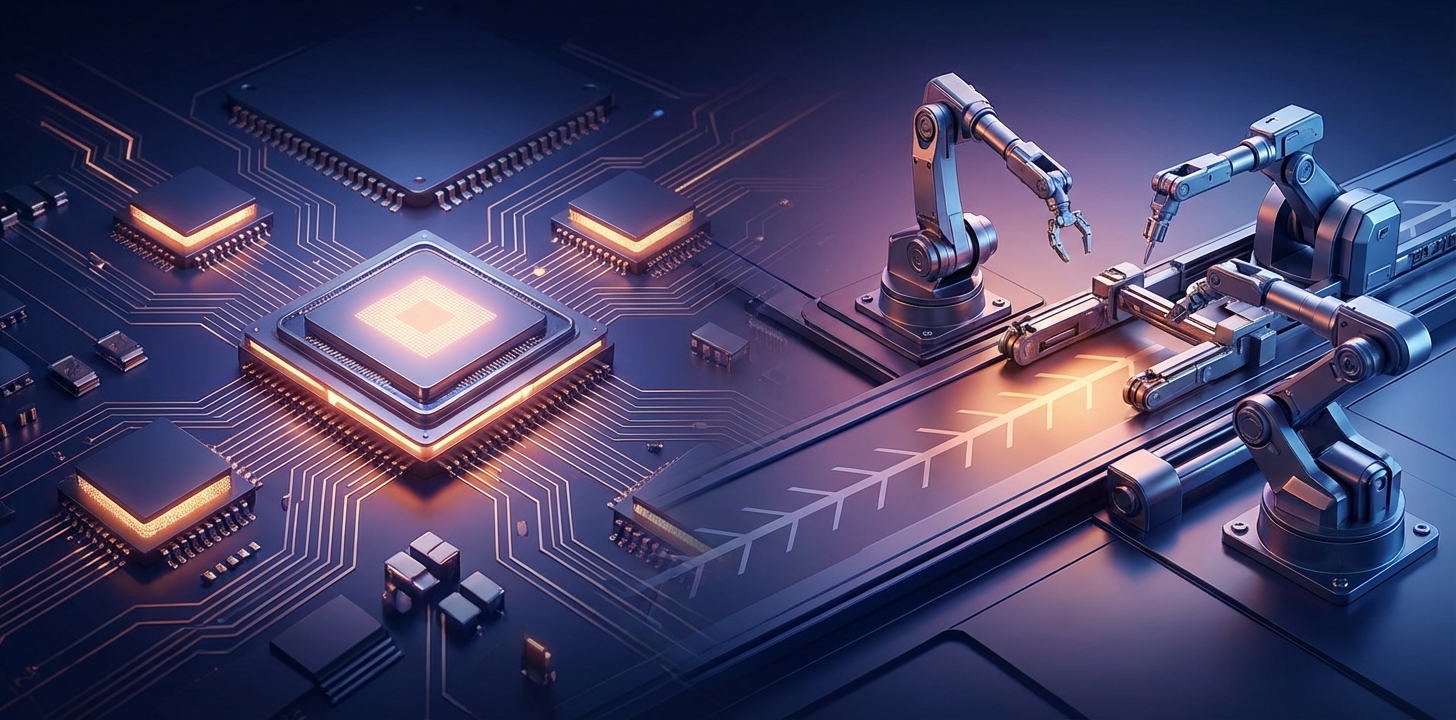
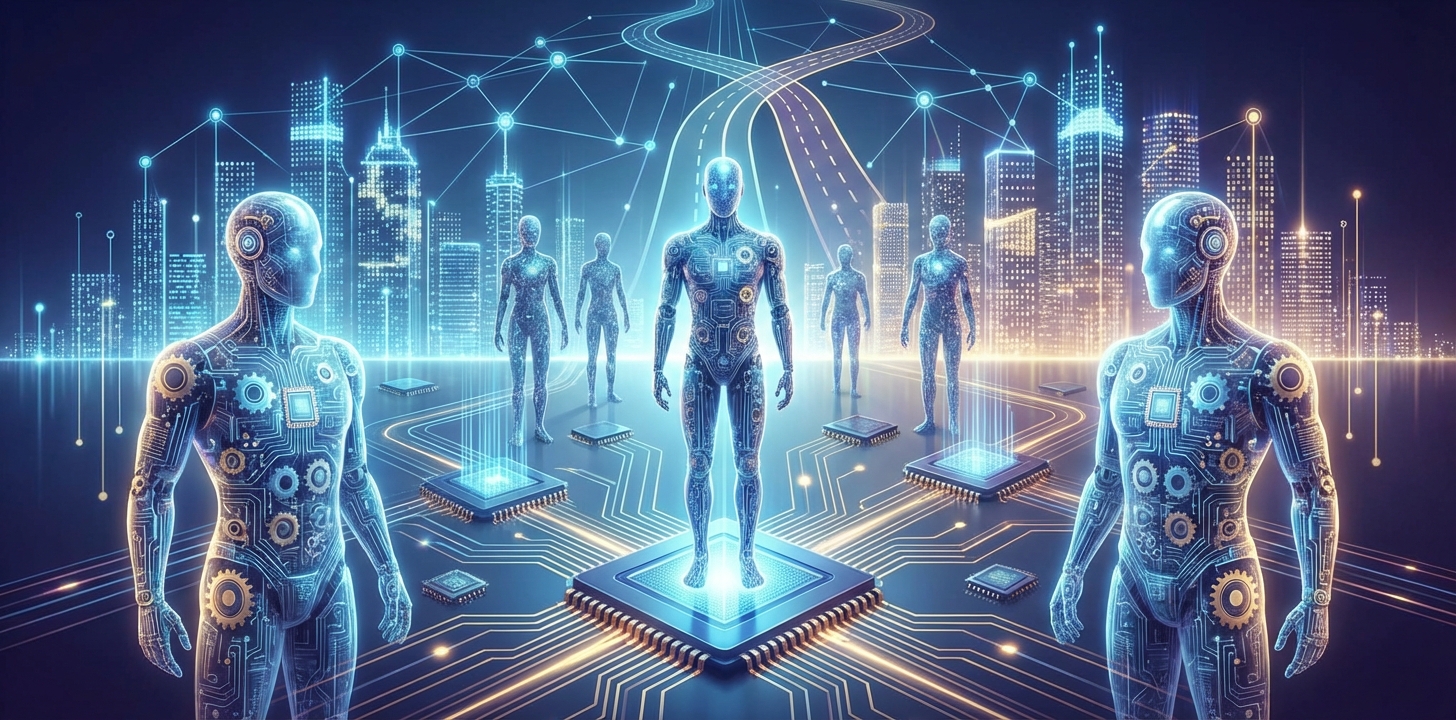
For the past few years, AI has been a "brain in a box"—a chatbot that lives on your screen and writes emails. But as we look toward 2026, the brain is getting a body. We are entering the era of Physical AI, where the digital intelligence of LLMs (Large Language Models) meets the cold, hard steel of robotics and the blistering speed of next-generation chips. 🤖
Why This Matters
If you think AI is just about ChatGPT making your job easier, you’re only seeing 10% of the picture. The shift coming in 2026 matters because it moves AI from our screens into our physical world. This means everything from how we manufacture cars to how we perform surgery is about to change.
For the average person, this means cheaper goods, more personalized services, and—yes—a massive shakeup in the job market. We are moving away from "software that thinks" to "machines that do." If your business or career relies on physical processes, the 2026 hardware surge is your new best friend (or your most formidable competitor).
In plain English: The "Godzilla" of technology is finally stepping out of the ocean and into the city. We need to be ready for the footprint it leaves behind. 🐾
The Big Story
The heartbeat of the AI world will skip a beat from March 16–19, 2026, in San Jose. That is when NVIDIA GTC 2026—the "Super Bowl of AI"—will kick off [12]. NVIDIA isn't just a chip company anymore; they are the architects of "AI Factories."
The focus for 2026 is "Agentic AI" and "Physical AI." While 2024 was about asking AI questions, 2026 is about AI "Agents" that can take actions. Think of an AI that doesn't just suggest a travel itinerary but actually books the flights, negotiates the hotel price, and handles the visa application while you sleep.
But wait, what’s the catch? While the hype is at an all-time high, a startling report shows that the majority of firms in Southeast Asia are actually struggling to see a financial return on their AI investments [7].
This "ROI Gap" is the biggest hurdle of 2026. Companies are buying the "Ferrari" (the AI software) but don't have the "gas" (the data) or the "driver" (the skilled workforce) to make it move. This is why the focus is shifting toward specialized hardware and robotics that provide clear, measurable utility in warehouses and hospitals.
US Watch
In the United States, the focus is squarely on the intersection of privacy and power. The IAPP Global Summit 2026 will be the ground zero for how we govern these "thinking machines" [10]. As AI gets more integrated into hardware, the data it collects becomes more personal. A robot in your home sees everything—and the US is racing to ensure that data doesn't become a liability.
Silicon Valley is also doubling down on "Physical AI" through partnerships between chip giants and robotics startups. We are seeing a massive push to bring manufacturing back to US soil using highly automated AI factories. The goal? To reduce reliance on global supply chains that have been shaky at best. 🇺🇸
China Watch
While the US focuses on the "brain" and "privacy," China is winning the "body" race. China’s massive manufacturing infrastructure is being upgraded with AI at a staggering rate. They are treating humanoid robots not as toys, but as the solution to a shrinking labor force.
Expect to see Chinese tech giants unveiling humanoid robots that can work 24/7 in electronics assembly lines. By 2026, the competition between the US and China won't just be about who has the best chatbot; it will be about who has the most efficient robotic workforce. 🇨🇳
Global Signal
The global economy is currently a tale of two speeds. On one hand, Southeast Asia's digital economy has hit a massive $300 billion, with AI expected to supercharge that even further [8]. On the other hand, legislative mentions of AI have risen by over 21% globally, marking a ninefold increase since 2016 [20].
The "AI for Good" Global Summit 2026 aims to ensure that these breakthroughs don't just benefit the billionaires in tech hubs, but actually serve humanity by building global standards for skills and safety [9].
| Feature | Large Corporations (2026) | Mid-Market/SMEs (2026) |
|---|---|---|
| Adoption Rate | ~85% | ~40% [14] |
| Primary Focus | Custom AI Clouds & Robotics | Off-the-shelf AI Tools |
| Main Challenge | Regulatory Compliance | Financial ROI & Talent |
| Hardware | Proprietary AI Chips | Cloud-based Inference |
| Malaysia Watch | ||
| Malaysia is positioning itself as the "Data Center Capital" of Southeast Asia. The Budget 2026 (Belanjawan MADANI) is a "strategic whole-of-nation catalyst" for the AI Nation 2030 vision [4]. | ||
| The government is putting its money where its mouth is with two massive infrastructure projects: |
- The RM2 Billion SALAM Cable: High-speed underwater connectivity to ensure Malaysia stays linked to the global digital grid.
- The RM2 Billion Sovereign AI Cloud: A dedicated cloud infrastructure to ensure Malaysia's data stays within its borders while powering local AI innovation.
Digital Minister Gobind Singh Deo has been vocal about transforming data into a national asset [2]. The goal is clear: use AI and chips to sustain a 4-5% economic growth rate in 2026 [3]."Belanjawan MADANI 2026 bridges vision and delivery. It signals Malaysia's readiness to harness artificial intelligence, data, and digital transformation for all." — Official Statement from MyDigital [1]. 🇲🇾
What to Do Next
- Audit Your "Agent" Potential: Look at your daily tasks. Which ones require multiple steps (booking, emailing, filing)? Start looking for "Agentic AI" tools that can handle workflows, not just text generation.
- Invest in "Data Hygiene": If you're a business owner, AI won't work without clean data. Before buying expensive AI hardware or software in 2026, ensure your customer and operational data is organized.
- Upskill for "Human-in-the-Loop": As Physical AI takes over manual tasks, the high-value roles will be those who can manage the robots. Learn the basics of AI ethics and prompt engineering for physical systems. 🛠️
- Watch the Hardware Cycle: If you are planning an IT refresh for your office or factory, wait for the post-GTC 2026 announcements. The specialized chips coming in mid-2026 will make current hardware look like a calculator.
TL;DR - 2026 is the Year of Physical AI: AI is moving from screens to robots and specialized hardware, with NVIDIA leading the charge in March 2026.
- Malaysia's Big Bet: The government is investing RM4 billion into a Sovereign AI Cloud and the SALAM underwater cable to become a regional AI powerhouse.
- The ROI Reality Check: Most firms are still struggling to make money from AI; the winners in 2026 will be those who focus on specific "Agentic" workflows.
- A Growing Divide: Large firms are adopting AI at 3x the rate of smaller businesses, creating a "missing middle" that needs to catch up fast.
#AI #LLM #AIAgents #AITools #ChinaAI #USAi #NVIDIA #Robotics #MalaysiaAI #DigitalTransformation #FutureOfWork #AIHardware #QuantumComputing #Budget2026
Found this article helpful? Share it with others!
Quick AI FAQ
How does this AI development affect Malaysian businesses?
Local businesses can leverage these AI breakthroughs to automate repetitive tasks, improve customer engagement via smart chatbots, and scale content production with 80% lower costs.
Is it safe to integrate AI into existing workflows?
Yes, when implemented with professional oversight. We focus on secure, privacy-compliant AI integrations that align with Malaysia's PDPA regulations.
Where can I get help with AI implementation in Penang?
JOeve Smart Solutions provides on-site and remote AI consultation for SMEs in Penang and across Malaysia, specializing in web apps, chatbots, and video automation.