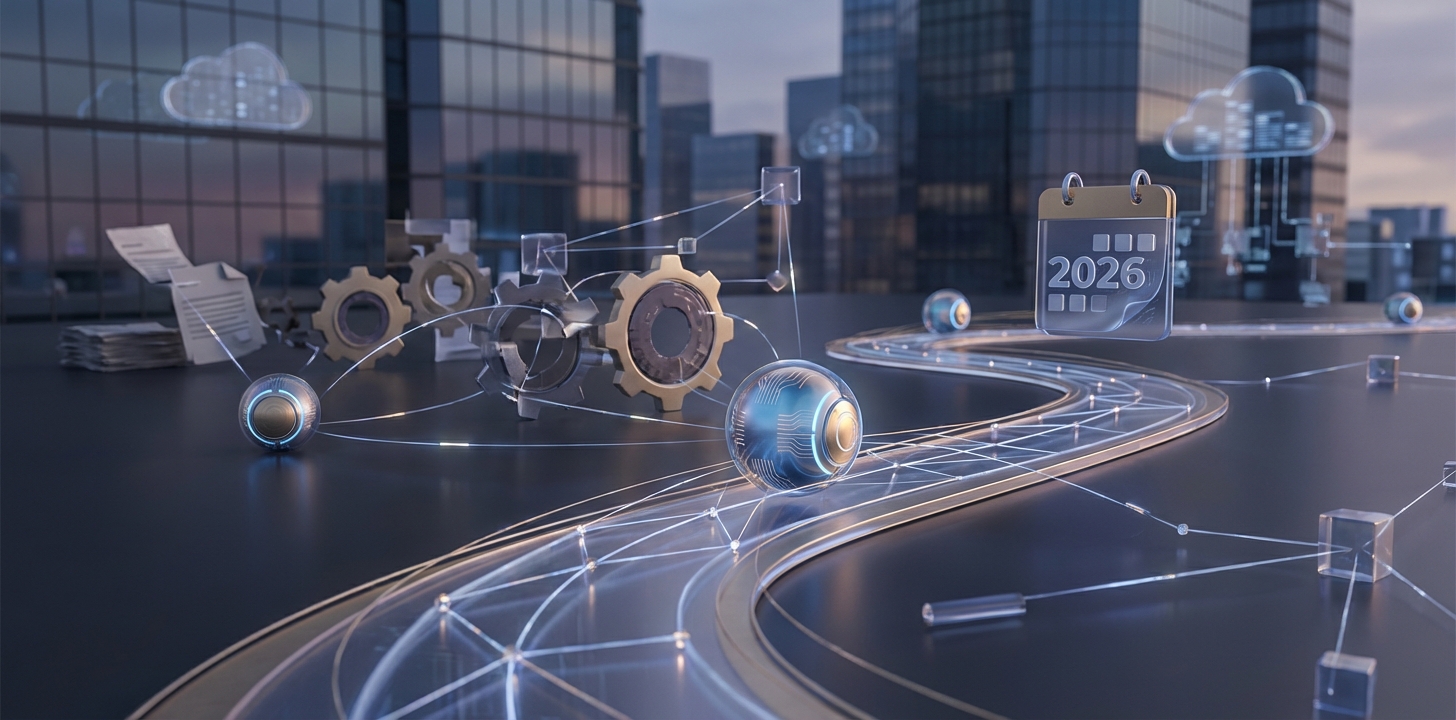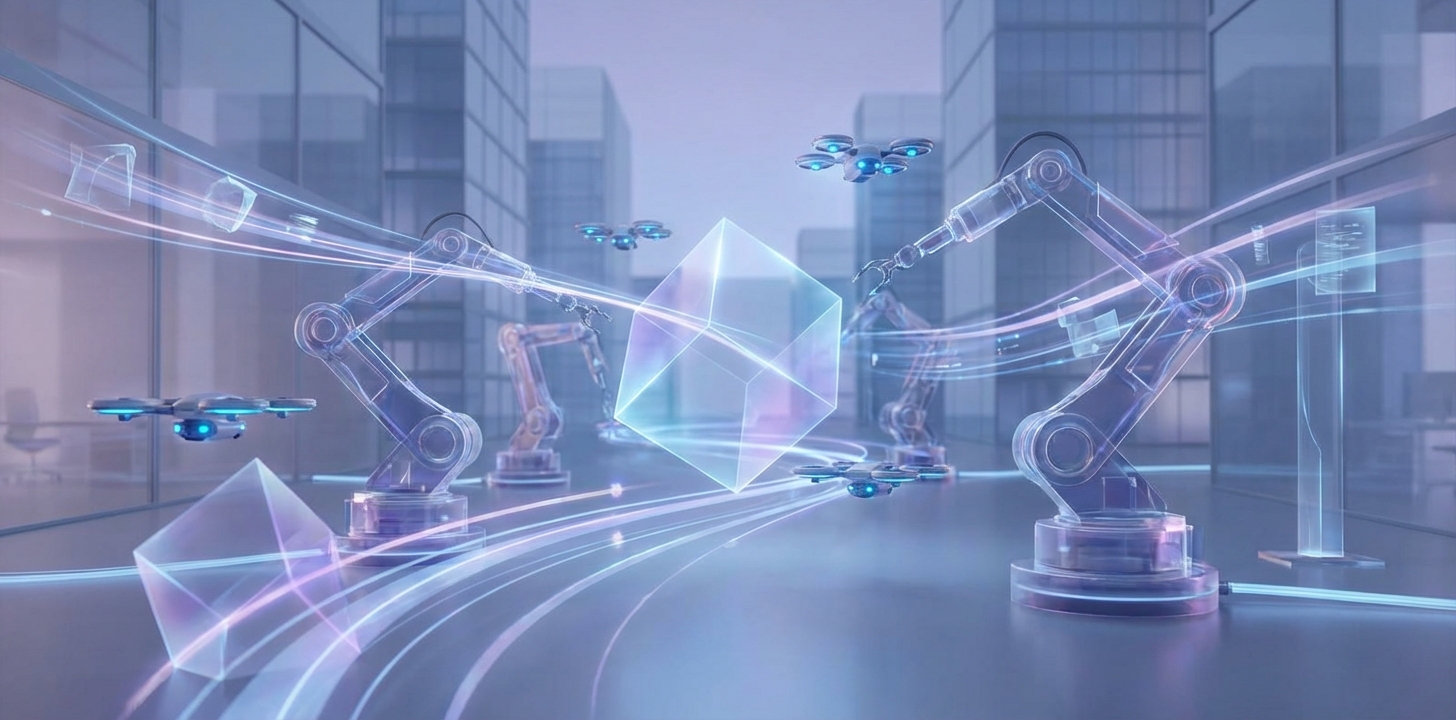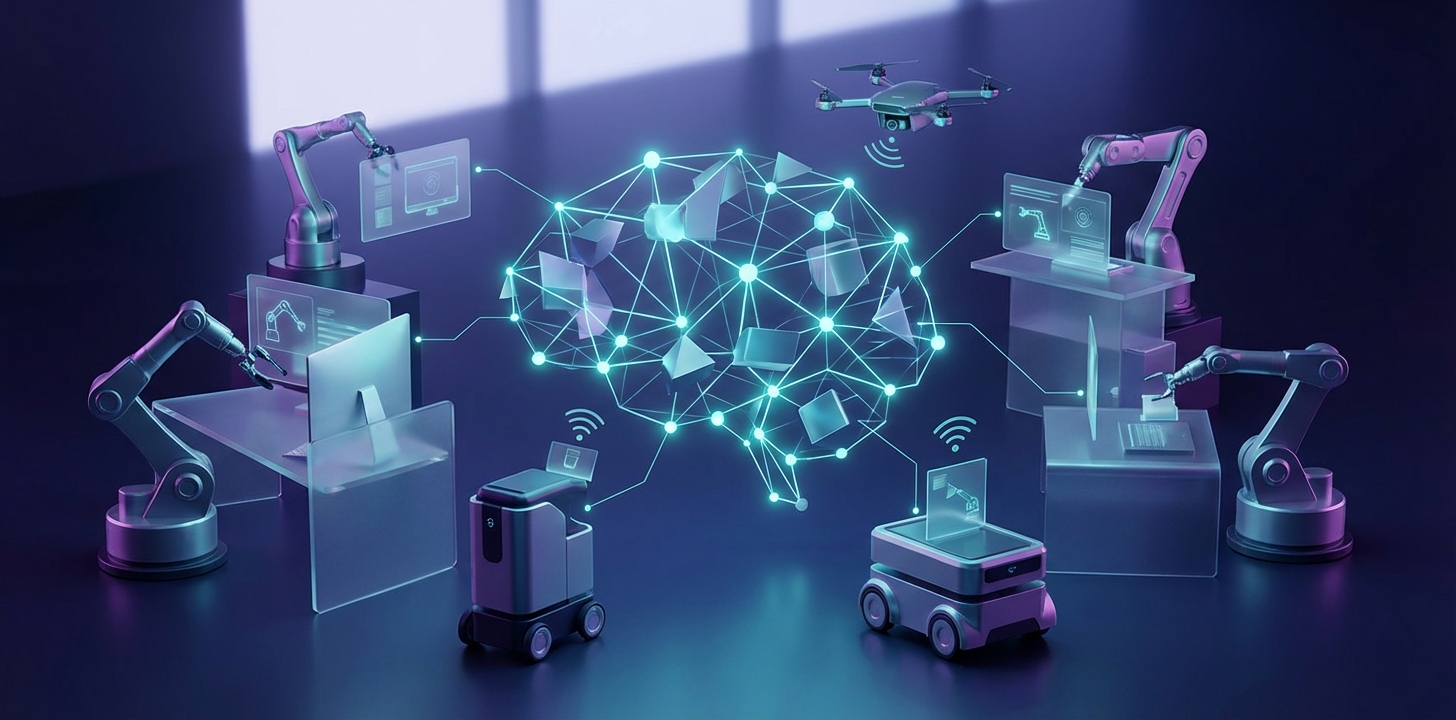
The 2026 AI Roadmap: How Autonomous Agents are Changing Everything
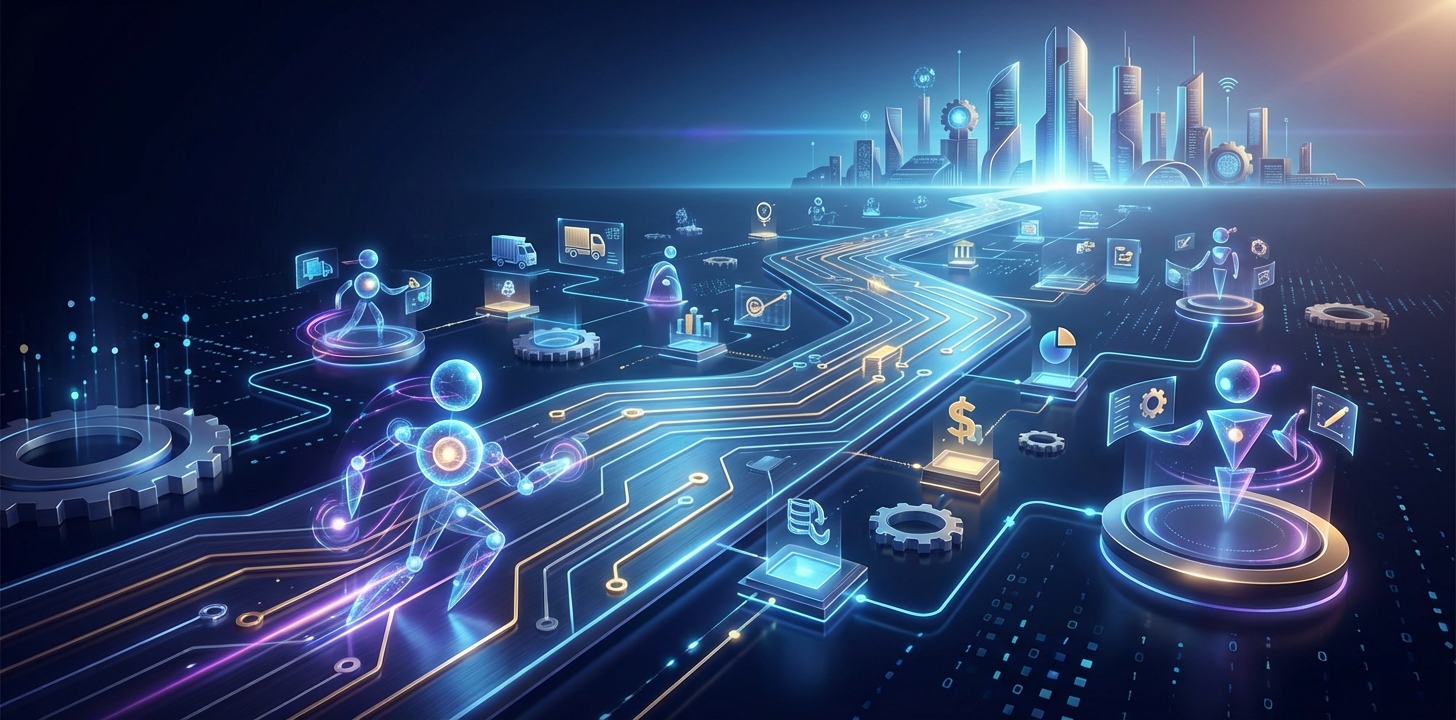
The 2026 AI Roadmap: How Autonomous Agents are Changing Everything
Imagine walking into your office on a Monday morning. You haven’t checked your email yet, but your "AI Agent" has already triaged your inbox, rescheduled a conflicting meeting, and drafted a project proposal based on a conversation you had on Friday. ☕
As you sit down, a sleek, humanoid robot glides past, handing you a perfectly frothed latte before heading off to restock the printer paper. This isn't a scene from a sci-fi movie; it is the reality of the "Agentic Shift" of 2026. We are moving past the era of AI that just "talks" to an era of AI that "does." 🤖
The transition is happening faster than anyone predicted. While 2024 was about chatbots and 2025 was about integration, 2026 is officially the year of the Autonomous Agent. These are systems that don’t just wait for your prompts; they observe, reason, and act on your behalf across the digital and physical worlds.
Why This Matters
For years, AI was like a very smart encyclopedia. You could ask it questions, and it would give you answers. But you still had to do the heavy lifting—copying that data into a spreadsheet, sending the emails, and managing the workflow.
In 2026, the "Agentic Workflow" has changed the game. AI agents now have "agency," meaning they can use tools, navigate software, and even make micro-decisions without asking for permission at every step [13]. This isn't just a convenience; it’s a fundamental restructuring of how business works.
If you are a business owner, this means your overhead for repetitive tasks is plummeting. If you are an employee, it means your job description is shifting from "doer" to "manager of agents." Understanding this shift is the difference between leading the market and being left behind in the "classical" era of computing.
The Big Story
The biggest headline of the year comes from Nvidia’s GTC 2026 conference, which felt less like a tech trade show and more like a coronation. Jensen Huang took the stage to announce a pivot that shocked the industry: Nvidia is moving beyond just being "the GPU company" [1].
In a move aimed directly at Intel’s heartland, Nvidia launched its own CPU server and the revolutionary Groq 3 AI chip [2]. With seven new chips in full production, Nvidia’s strategy is now focused on "inference"—the process of actually running AI models in real-time—rather than just training them.
| Feature | Old AI Era (2023-2024) | The New Agentic Era (2026) |
|---|---|---|
| Primary Goal | Training large models | Real-time Inference & Action |
| Hardware Focus | H100 GPUs | Groq 3 & Custom CPUs |
| Interaction | Prompt -> Response | Goal -> Autonomous Execution |
| Physicality | Screen-based | Humanoid Robots & Cobots |
| Wait, what? Why the pivot to CPUs and inference? Because for autonomous agents to work, they need to think fast and cheaply. You can't have a humanoid robot waiting five seconds for a cloud server to tell it how to catch a falling glass. It needs "intelligence at the edge." ⚡ | ||
| Nvidia’s hardware expansion is a direct response to the massive demand for AI infrastructure. We are seeing a "skewing" of the global hardware supply chain as hyperscalers (like Google and Microsoft) scramble to build out the physical backbone for these agents [9]. | ||
| US Watch | ||
| In the United States, the focus is on the "Physical AI" revolution. Silicon Valley summits are no longer just about software; they are filled with small robots roaming halls and pouring lattes for venture capitalists [3]. The US is betting big that humanoid robots will be the next major breakthrough. | ||
| Companies like OpenAI and Nvidia are channeling billions into "photonic products" and advanced AI infrastructure [11]. The goal is to create a seamless link between the digital brain of the AI and a physical body that can navigate a warehouse or a hospital. 🏥 | ||
| Investors are no longer just betting on apps; they are betting on "core hardware infrastructure" [10]. From autonomous vehicle design to real estate transactions managed entirely by AI, the US market is prioritizing the total automation of the enterprise customer service experience. | ||
| China Watch | ||
| While the US focuses on the "brain" and high-end humanoid design, China is dominating the Industrial Automation race. The integration of AI and robotics in Chinese factories has reached a tipping point. These robots aren't just programmed to move; they "perceive" in 3D and make informed decisions based on what they see [12]. | ||
| China is positioning itself as the world’s factory for the "Humanoid Revolution." By leveraging their existing manufacturing dominance, they are bringing the cost of robotic limbs and sensors down at an exponential rate. 🏭 | ||
| The "China Watch" for 2026 is all about scale. While a US-designed robot might be more "intelligent" in its conversation, Chinese-built robots are likely to be the ones actually working on the assembly lines of the world, thanks to their massive lead in AI-driven industrial hardware. | ||
| Global Signal | ||
| The global signal for 2026 is clear: Quantum AI is no longer just hype. Google Quantum AI is now operating "beyond classical capabilities," creating hardware and software tools that can solve problems a traditional computer would take thousands of years to crack [5]. |
"Recent advancements in AI methods have opened new possibilities for more efficient and flexible quantum circuit design," reports a recent study in Nature [7].
This is the "secret sauce" for the next decade. Quantum computing leverages the weird principles of quantum mechanics to process information in ways we are only beginning to understand [6]. When you combine Quantum's raw processing power with AI's ability to learn, you get a "Global Signal" that suggests we are about to solve climate change, energy, and medicine at warp speed. 🌍
Malaysia Watch
So, where does Malaysia fit into this high-tech 2026 landscape? The opportunity is massive. As the hardware supply chain skews toward AI accelerators and data center expansion, Malaysia’s role as a semiconductor and data center hub is becoming critical [8].
Malaysia is uniquely positioned to be the "Agentic Hub" of Southeast Asia. With the rise of Collaborative Robots (Cobots), Malaysian SMEs in the manufacturing sector can now use AI to respond to human gestures and speech on the factory floor, making automation accessible to smaller businesses, not just giants [13]. 🇲🇾
The challenge? Upskilling. The Malaysian workforce must move from manual operation to "
Found this article helpful? Share it with others!
Quick AI FAQ
How does this AI development affect Malaysian businesses?
Local businesses can leverage these AI breakthroughs to automate repetitive tasks, improve customer engagement via smart chatbots, and scale content production with 80% lower costs.
Is it safe to integrate AI into existing workflows?
Yes, when implemented with professional oversight. We focus on secure, privacy-compliant AI integrations that align with Malaysia's PDPA regulations.
Where can I get help with AI implementation in Penang?
JOeve Smart Solutions provides on-site and remote AI consultation for SMEs in Penang and across Malaysia, specializing in web apps, chatbots, and video automation.