2026 AI Revolution: Inside the New Era of Autonomous Agents
2026 AI Revolution: Inside the New Era of Autonomous Agents
Imagine waking up to find that your AI assistant hasn't just sorted your emails; it’s already argued with the cable company about a billing error, booked your doctor's appointment based on your sleep data, and negotiated a 15% discount on your next grocery haul. This isn't a scene from a futuristic movie. This is the reality of the "Agentic Era" that has officially kicked off in 2026. 🤖
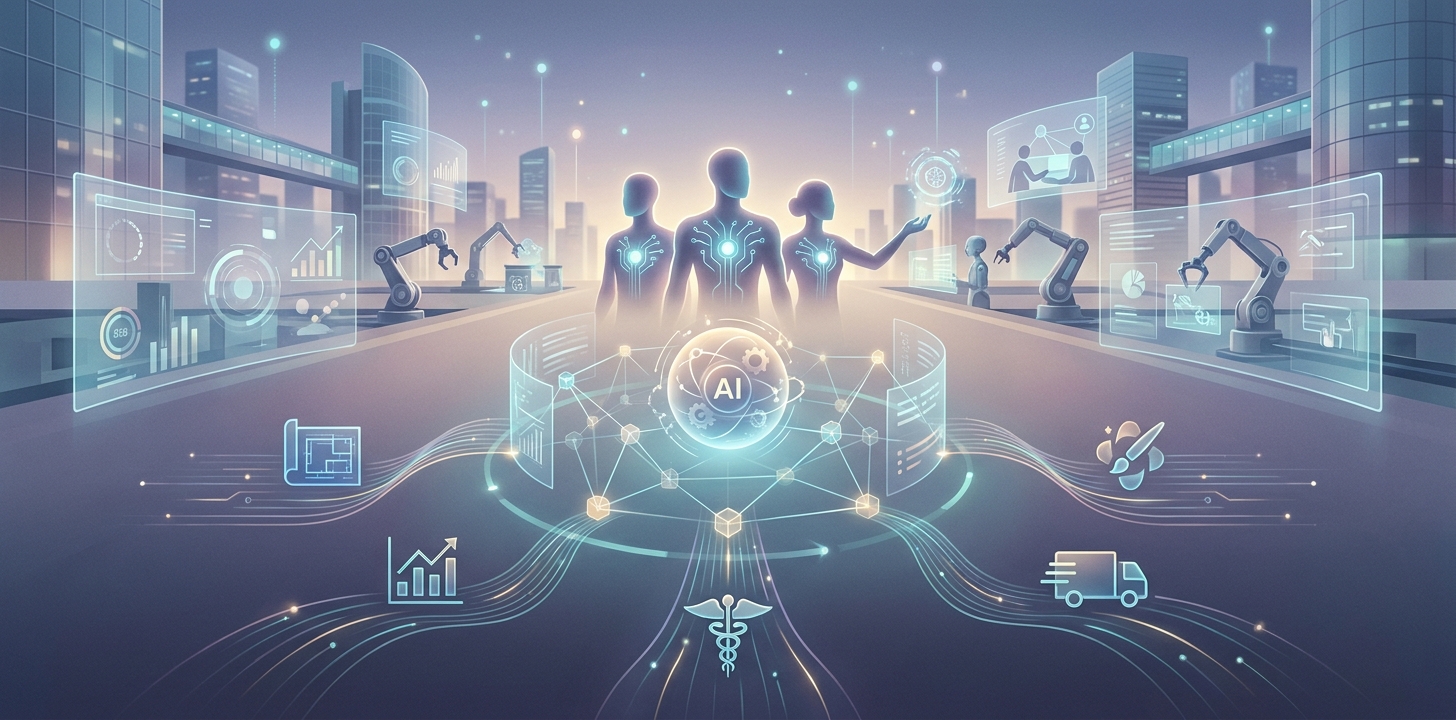
We are moving rapidly away from the days of "chatting" with a bot. In 2026, the focus has shifted from AI that talks to AI that acts. These are autonomous agents—software and hardware entities that can reason, plan, and execute complex workflows without you having to hold their hand at every step. It’s like moving from a search engine to a digital employee.
Why This Matters
For years, AI was like a very smart encyclopedia. You asked it a question, and it gave you an answer. But you still had to do all the "legwork" yourself. If you wanted to plan a trip, you had to take the AI's suggestions and manually book the flights, hotels, and tours.
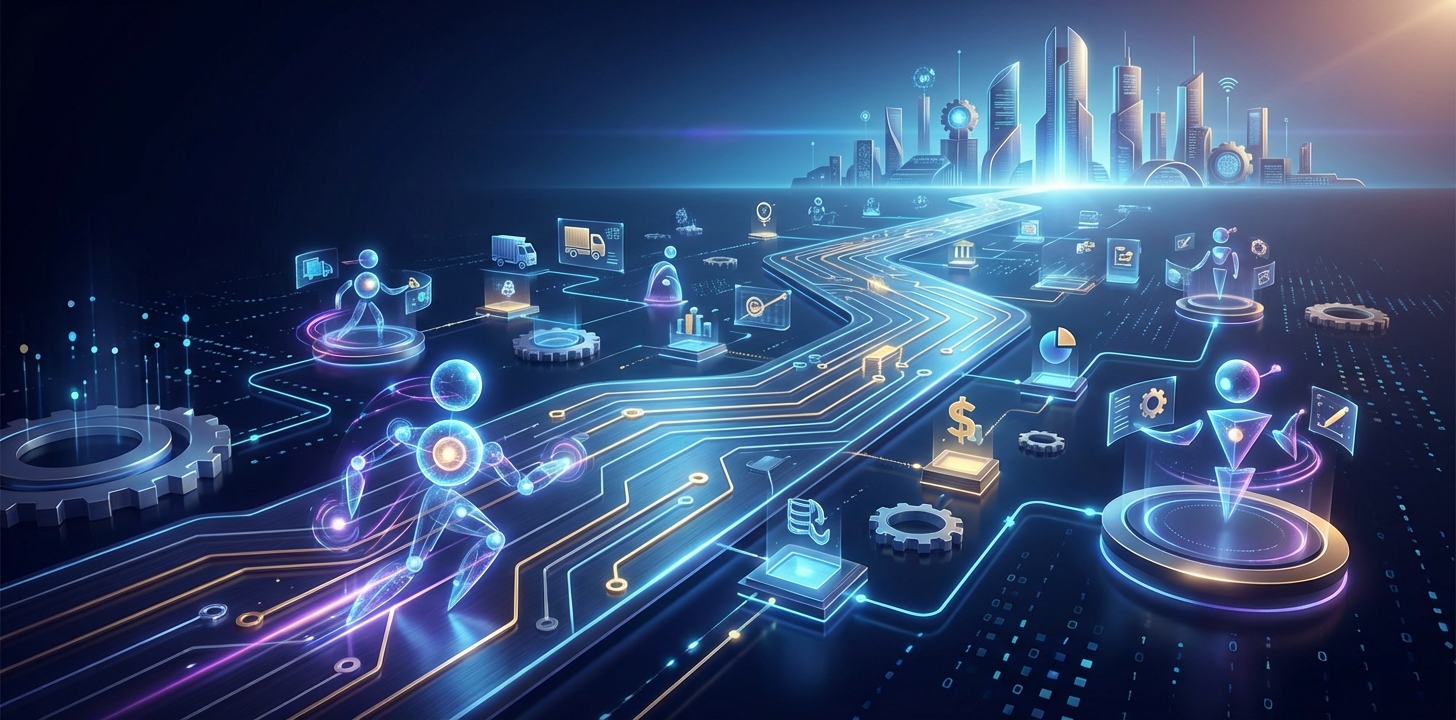
In 2026, agentic AI changes the game by handling the execution. This matters because it’s the ultimate "time hack." For businesses, it means automating entire departments—from customer service to supply chain management—using autonomous "agentic workflows" rather than just static software. 📈
For the average person, this means a massive reduction in "digital chores." However, it also brings up a big question: if AI can do the work, what happens to the people who used to do it? We are entering a period where "prompt engineering" is being replaced by "agent orchestration." Understanding how to manage these digital workers is the most important skill of the decade.
The Big Story
The biggest news rocking the tech world right now is Nvidia's massive pivot at GTC 2026. Jensen Huang just unveiled the "Rubin" platform, a successor to the legendary Blackwell chips. This isn't just a faster processor; it’s a "six-chip AI supercomputer" designed specifically to power autonomous agents [2].
Nvidia is shifting its entire strategy toward "inference"—the part where the AI actually makes decisions and takes action—rather than just training [5]. Along with the hardware, they introduced "Alpamayo," a new open reasoning model that allows AI agents to "think" before they act, significantly reducing the errors that used to plague older chatbots [6].
Wait, what? Here’s the real kicker: Nvidia is even looking at the stars. Reports are surfacing that orbital data centers are becoming a reality to handle the massive compute needs of these global agent networks [1]. Processing data in space might sound wild, but it could be the only way to keep up with the cooling and energy demands of the Rubin platform.
| Feature | Blackwell (2024-25) | Rubin (2026) |
|---|---|---|
| Primary Focus | Training Large Models | Autonomous Inference & Agency |
| Chip Architecture | Dual-GPU Design | Six-Chip Integrated System |
| Reasoning Model | Basic Chain-of-Thought | Alpamayo Open Reasoning |
| Deployment | Terrestrial Data Centers | Terrestrial & Potential Orbital |
| US Watch | ||
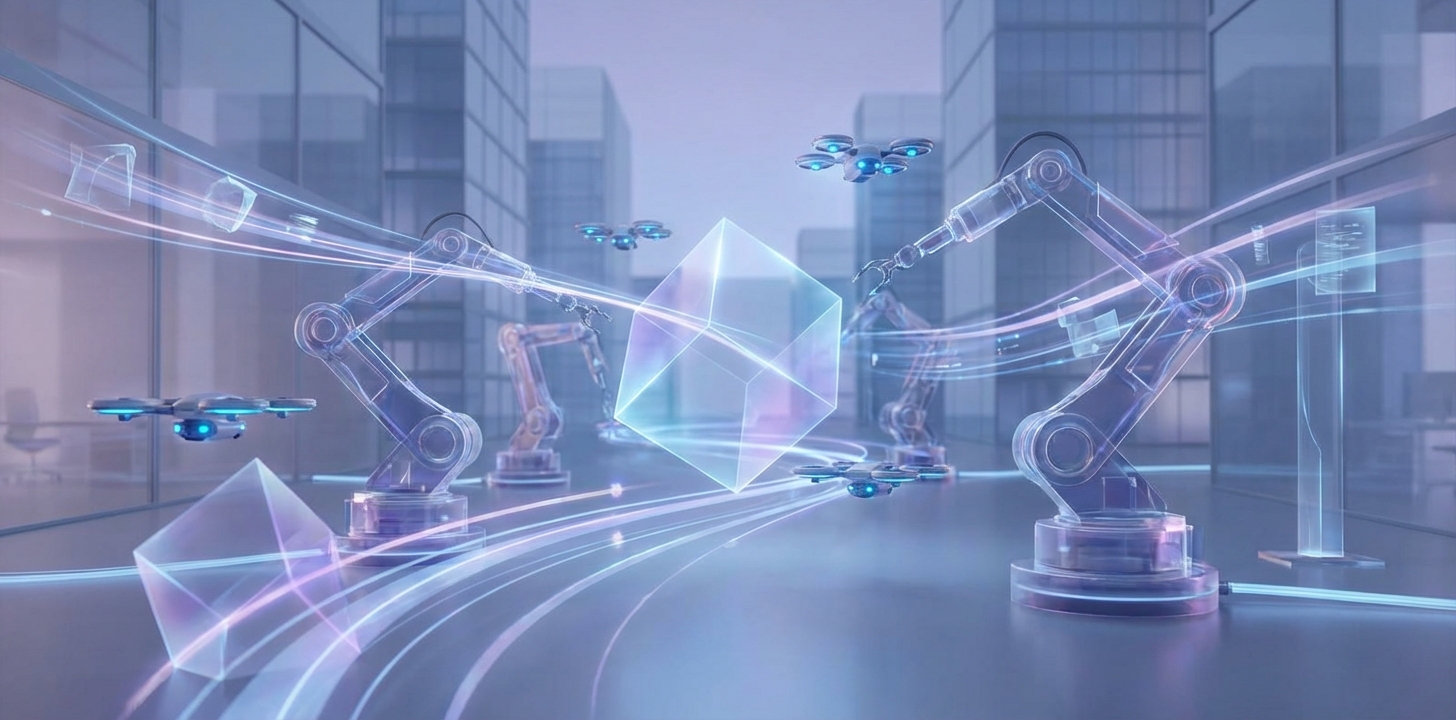
| In the United States, the focus has shifted from the screen to the streets. Humanoid robots are no longer just viral videos; they are entering the workforce. Companies like Figure and Tesla are deploying "General Purpose Humanoids" that use agentic AI to navigate messy, unpredictable human environments [7]. | ||
| At a recent Silicon Valley summit, small robots were seen roaming the halls, autonomously pouring lattes and even folding laundry—a task that was considered the "holy grail" of robotics just a year ago [11]. The US is leading the charge in integrating these robots into the domestic sphere, aiming for a "caregiver" model to help an aging population. | ||
| Meanwhile, Google is making massive strides with "Quantum AI." They are focusing on error-corrected quantum computations to unlock the full potential of machine learning [16]. This could eventually allow AI agents to solve problems in seconds that would take today’s best supercomputers thousands of years, particularly in drug discovery and climate modeling. | ||
| China Watch | ||
| China is taking a slightly different—and some say more "uncanny"—approach. They recently unveiled a new AI robot with a face that looks disturbingly human, capable of mimicking complex emotions and micro-expressions [8]. The goal is to break the "human skill barrier," making robots that don't just work like us, but feel like us. | ||
| Beyond just looks, Chinese researchers are pushing the boundaries of "biohybrid robots" and compostable soft robots [10]. These machines use biological tissue or eco-friendly materials, allowing them to perform delicate tasks or operate in environments where traditional metal robots would be too clunky or harmful. |
"The countdown to when humanoid robots stop being science fiction and start being your co-workers or caregivers is over. 2026 is the year it actually happens." — Industry Expert Observation [13]
Global Signal
Worldwide, we are seeing a "Humanoid Robot Revolution." The top 12 humanoid models of 2026 are now being integrated into manufacturing, logistics, and even retail sectors globally [9]. This is causing a global shift in labor economics.
The "Global Signal" is clear: AI is becoming physical. Whether it’s an agentic software bot managing your company’s finances or a humanoid robot stocking shelves, the era of "passive AI" is dead. The new global economy is built on "Autonomous Productivity." 🌍
Did you know?
Quantum AI isn't just about speed; it leverages the principles of quantum mechanics to process information in ways that classical computers literally cannot. Think of it like being able to read every book in a library at the same time, rather than one by one [18].
Malaysia Watch
So, what does this mean for Malaysia? As a growing hub for data centers in Southeast Asia, Malaysia is perfectly positioned to host the "brains" of these agentic networks. The influx of Nvidia’s Rubin hardware into local data centers could turn Malaysia into a regional AI powerhouse.
There is also a massive opportunity in "Agentic Manufacturing." Malaysian factories can leverage these new humanoid robots to handle high-precision tasks that were previously too difficult to automate. This isn't about replacing workers, but about upskilling them to become "Robot Fleet Managers." 🇲🇾
However, there’s a contrarian take here: While everyone is focused on the hardware, the real win for Malaysia might be in "Localized Agents." We need AI that understands the nuances of Manglish, local customs, and the specific regulatory landscape of Southeast Asia. The first company to build a truly "local" agentic workflow for the Malaysian SME market will likely win big.
What to Do Next
- Audit Your Workflows: Look at your daily tasks. Anything that is repetitive and requires 3-4 different software tools is a prime candidate for an "Agentic AI" tool. Start experimenting with autonomous agents now.
- Invest in "Orchestration" Skills: Stop learning how to write the perfect prompt and start learning how to manage a "fleet" of AI agents. Understanding how to connect different AI tools is the 2026 power move.
- Watch the Humanoid Space: If you are in manufacturing or logistics, keep a close eye on the "Top 12" humanoid robots of 2026. The cost of these units is dropping fast, and they may be a viable investment for your business sooner than you think [9].
- Stay Informed on Quantum: While still in the early stages, "Quantum AI" will eventually rewrite the rules of what's possible. Follow Google and AWS’s quantum developments to ensure your long-term tech strategy isn't built on obsolete foundations [20].
TL;DR - Nvidia’s Rubin Platform: A new six-chip supercomputer designed specifically for autonomous AI agents and "reasoning" [2].
- Humanoid Breakthroughs: Robots are moving from labs to reality, with US models focusing on domestic help and Chinese models breaking the "human skill barrier" [10].
- Agentic Era: 2026 marks the shift from AI that answers questions to AI that autonomously executes complex tasks ⚡.
- Quantum Leap: Google and others are merging Quantum Computing with AI to solve "impossible" problems faster than ever before [16].
#AI #LLM #AIAgents #AITools #ChinaAI #USAi #NvidiaRubin #HumanoidRobots #QuantumAI #FutureOfWork #Automation2026 #TechNews #MalaysiaAI #AIRevolution
Found this article helpful? Share it with others!
Quick AI FAQ
How does this AI development affect Malaysian businesses?
Local businesses can leverage these AI breakthroughs to automate repetitive tasks, improve customer engagement via smart chatbots, and scale content production with 80% lower costs.
Is it safe to integrate AI into existing workflows?
Yes, when implemented with professional oversight. We focus on secure, privacy-compliant AI integrations that align with Malaysia's PDPA regulations.
Where can I get help with AI implementation in Penang?
JOeve Smart Solutions provides on-site and remote AI consultation for SMEs in Penang and across Malaysia, specializing in web apps, chatbots, and video automation.