The 2026 AI Agent Revolution: Inside the New Era of Autonomous Work
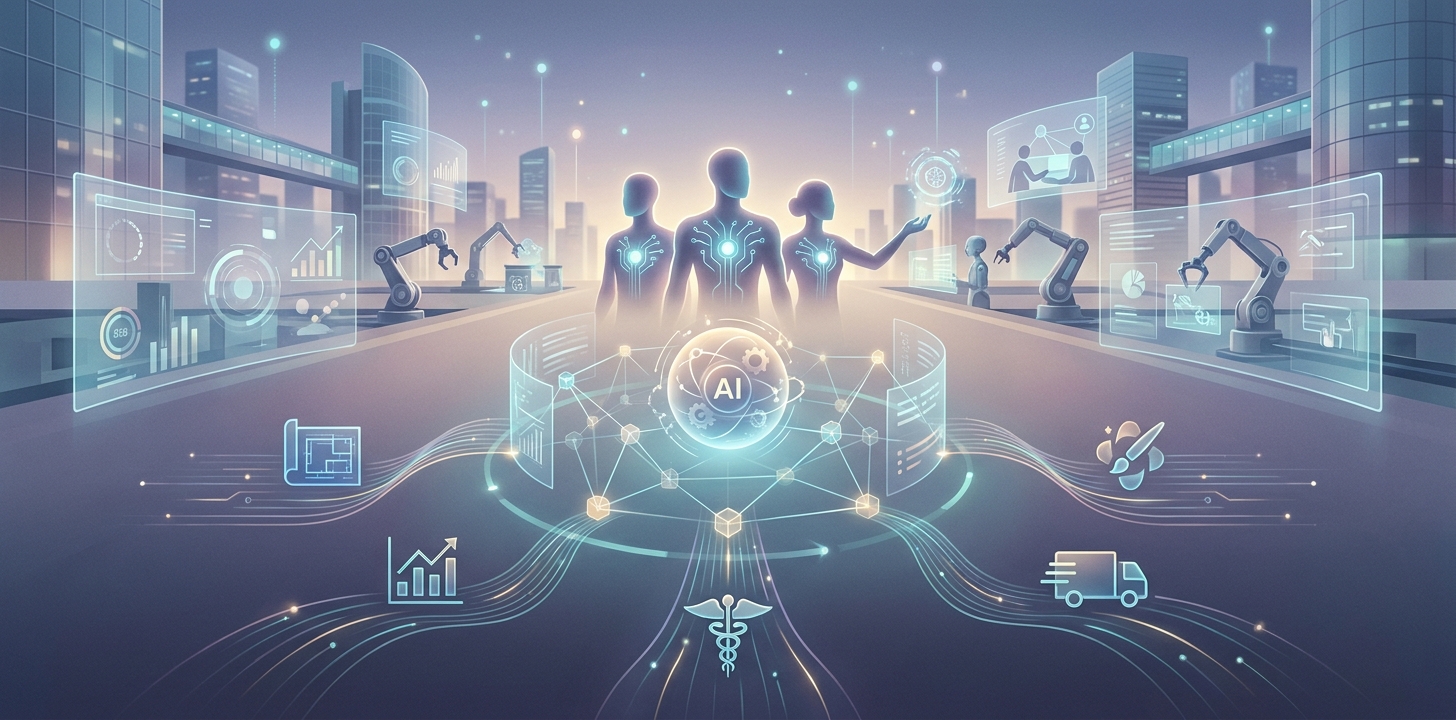
The 2026 AI Agent Revolution: Inside the New Era of Autonomous Work
Imagine waking up on a Tuesday morning in 2026. You haven’t even touched your coffee yet, but your personal AI agent has already scanned your 200 overnight emails, rescheduled a conflicting dental appointment, drafted a project proposal based on yesterday’s Slack chatter, and—just for good measure—ordered your favorite nasi lemak for delivery at exactly 8:30 AM. This isn't a scene from a sci-fi movie; it’s the reality of the "Agentic Era" we’ve just entered.
The shift we are seeing right now is massive. We are moving away from "Generative AI"—where we ask a bot to write a poem or summarize a PDF—and into the world of "Autonomous AI Agents." These are systems that don't just talk; they do. They have "fingers" in your browser, access to your software, and the authority to execute complex workflows without you having to hover over the "Enter" key. It’s the difference between a librarian who tells you where a book is and a researcher who goes out, finds the book, reads it, and writes the report for you. 🚀
Why This Matters
This matters because the "productivity gap" is finally closing. For the last two years, we’ve been using AI as a fancy typewriter. But in 2026, AI is becoming the office manager. For businesses, this means the end of "busy work." If an AI agent can handle data entry, lead generation, and basic customer support, humans are freed up to do what we actually do best: strategy, creativity, and building real relationships.
In plain English? We are moving from "AI as a tool" to "AI as a teammate." If you’re a small business owner, you no longer need a 10-person team to scale; you might just need two talented humans and a fleet of specialized agents. This is why the global race for "Agentic supremacy" is heating up, with billions of dollars flowing into companies that can make these agents reliable, safe, and incredibly fast.
The Big Story
The headline story of the week is the viral breakthrough of the Hermes AI Agent framework. While the world was obsessed with big models like GPT-5, Hermes quietly changed the game by focusing on "small-model agency." Instead of one giant, expensive brain trying to do everything, Hermes allows users to deploy dozens of tiny, hyper-specialized agents that work together like a swarm. Think of it like a hive of bees: one bee finds the flower, another collects the nectar, and another guards the hive.
Wait, what? You mean I don't need a massive supercomputer to run an autonomous office? Exactly. The Hermes breakthrough shows that efficiency is now more important than size. This "Agentic Workflow" movement is being adopted by enterprises faster than any technology in history. Companies are no longer asking "What can AI say?" but rather "What can AI finish?" The focus has shifted to business automation breakthroughs that actually impact the bottom line. [17]
| Feature | Old AI (2024) | New AI Agents (2026) |
|---|---|---|
| Action | Generates text/images | Executes multi-step tasks |
| Autonomy | Requires constant prompting | Operates on high-level goals |
| Integration | Sits in a chat box | Lives inside your apps (ERP, CRM) |
| Goal | Content creation | Task completion |
| US Watch | ||
| In the States, the "Big Three"—OpenAI, Anthropic, and Google—are in a total arms race to see who can build the most "human-like" operator. OpenAI recently teased "Operator," a system designed to take over your web browser to perform tasks like booking flights or researching competitors. Not to be outdone, Anthropic’s "Computer Use" capability for Claude 3.5 has become the gold standard for developers, allowing the AI to actually "see" the screen and move the cursor just like a human would. | ||
| Google, meanwhile, is leveraging its massive ecosystem. By integrating agents directly into Workspace, Google is making it so your "Agent" knows your calendar, your files, and your emails better than you do. The contrarian take here? While everyone is worried about these models becoming "sentient," the real danger is them becoming "too helpful"—leading to a world where we forget how to perform basic digital tasks ourselves. | ||
| China Watch | ||
| Across the Pacific, China is taking a very different, "app-first" approach. Zhipu AI and Alibaba are leading the charge with agents that are deeply integrated into the mobile experience. Zhipu’s "AutoGLM" is already making waves by allowing users to control their entire smartphone via voice—ordering groceries on Meituan or booking rides on Didi without ever opening the apps. 📱 | ||
| Kimi (by Moonshot AI) and Minimax are focusing on the "infinite memory" aspect of agents. They want your AI agent to remember every conversation you’ve had for the last three years so it can act as a true digital twin. In China, the "AI Agent" isn't just a work tool; it's becoming a social companion and a lifestyle manager. The speed of iteration in the Chinese market is terrifyingly fast, with new "agentic" features being pushed out weekly. | ||
| Global Signal | ||
| The global signal is clear: Southeast Asia (SEA) is currently the most AI-optimistic region on the planet. According to recent reports, countries like Malaysia and its neighbors are leading the world in AI adoption enthusiasm. [11] By 2030, AI adoption could boost the region's GDP by a staggering 13% to 18%, adding nearly US$1 trillion in value. [18] | ||
| However, there’s a catch. While optimism is high, governance frameworks are struggling to keep up. We are building the high-speed rail of AI, but we haven't finished laying the tracks for safety and ethics yet. The global shift is moving from "How do we build it?" to "How do we control it?" as agents start making financial decisions on behalf of corporations. 🌍 |
Did You Know?
Southeast Asia is shifting from a foundational digital economy to an "Intelligent AI Reality." It's no longer just about having an app; it's about having an AI that runs the app for you. [12]
Malaysia Watch
Malaysia is not just sitting on the sidelines—it is making a massive, multi-billion ringgit play to become the "AI Hub" of the region. The government recently announced a bold goal to train 300,000 people in AI skills by 2029. [2] This isn't just for coders; it's for everyone from SME owners to factory workers.
Budget 2026 has been hailed as a "Digital Transformation" budget, focusing on making Malaysia an "AI Nation" by 2030. [3] To back this up, MDEC has introduced RM2.9 million in strategic grants specifically to help industries digitize and adopt AI agents. [10]
Perhaps most importantly, Malaysia is solving the "power problem." Google and TotalEnergies have signed a major deal to provide renewable energy for data centers in Malaysia. [9] This ensures that Malaysia’s AI surge is sustainable and doesn
Found this article helpful? Share it with others!
Quick AI FAQ
How does this AI development affect Malaysian businesses?
Local businesses can leverage these AI breakthroughs to automate repetitive tasks, improve customer engagement via smart chatbots, and scale content production with 80% lower costs.
Is it safe to integrate AI into existing workflows?
Yes, when implemented with professional oversight. We focus on secure, privacy-compliant AI integrations that align with Malaysia's PDPA regulations.
Where can I get help with AI implementation in Penang?
JOeve Smart Solutions provides on-site and remote AI consultation for SMEs in Penang and across Malaysia, specializing in web apps, chatbots, and video automation.