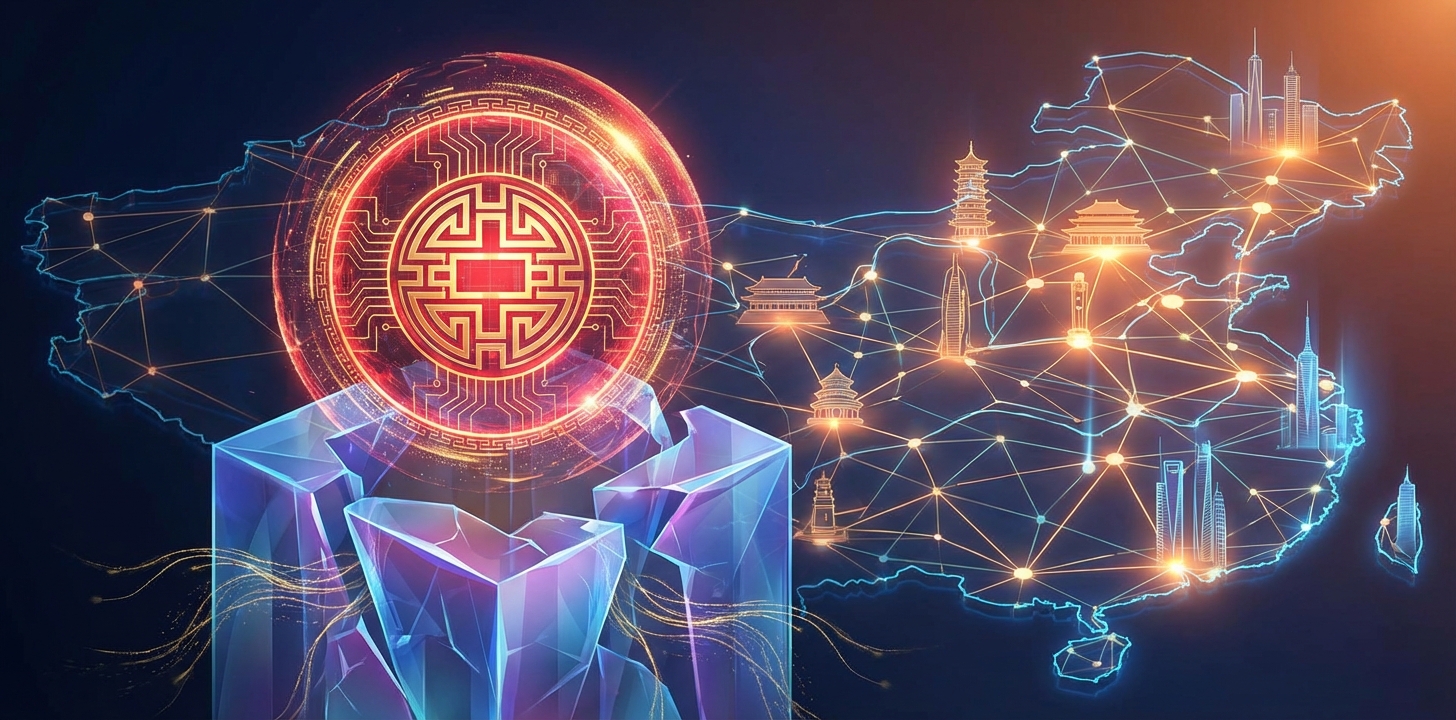
The 2026 AI Divide: Inside the Anthropic Ban and China’s Robot Rise
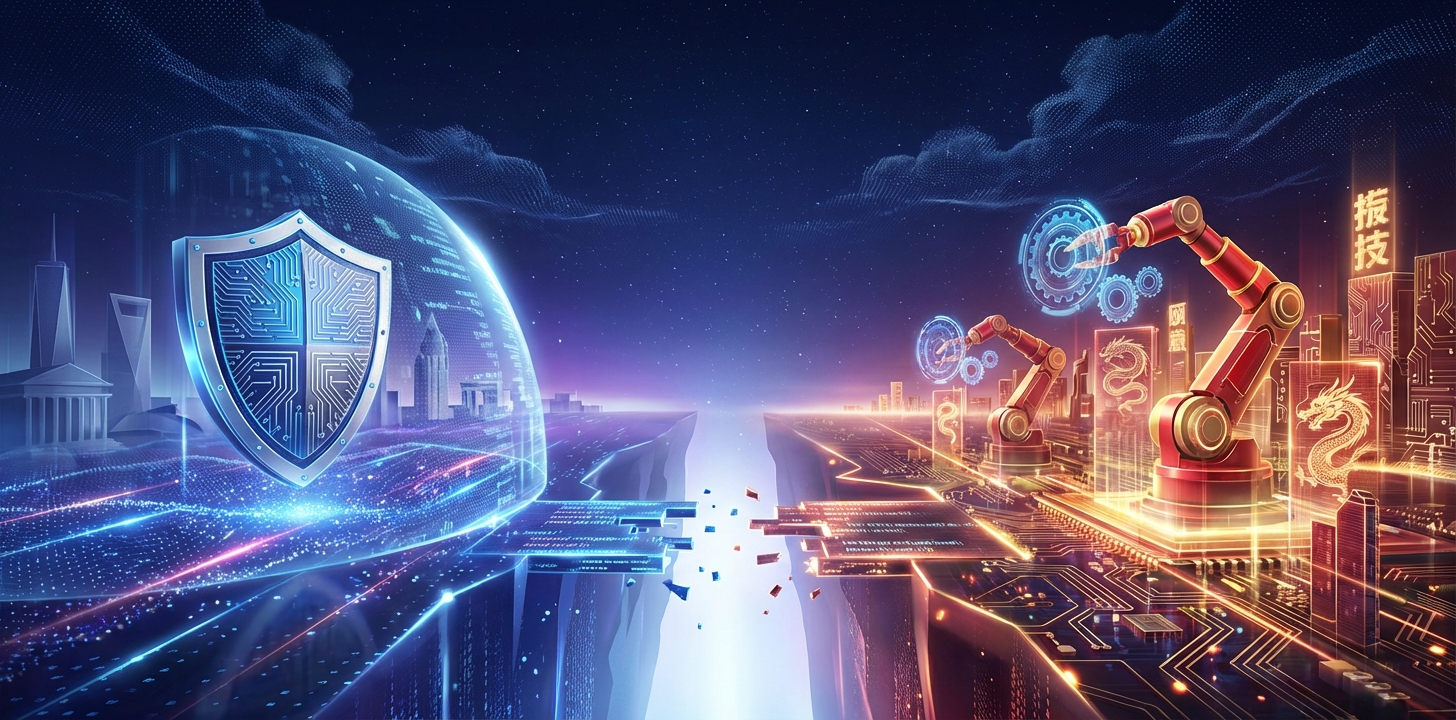
The 2026 AI Divide: Inside the Anthropic Ban and China’s Robot Rise
Imagine waking up to find that the AI assistant you use to draft emails, organize your schedule, and brainstorm business ideas has just been banned by the military for being "too uncooperative." It sounds like the plot of a techno-thriller, but in 2026, this is our reality. The line between civilian innovation and national security has finally blurred into a full-scale digital border wall.
While we were all busy arguing about whether AI would take our jobs, the technology itself underwent a massive metamorphosis. We’ve moved past the era of "chatting" with bots to an era where AI is the fundamental infrastructure of global power. From the boardrooms of Silicon Valley to the high-tech factories of Shenzhen, the stakes have never been higher, and the players are making moves that will define the next decade of human history. 🚀
Why This Matters
In plain English: AI is no longer a toy or a fancy parlor trick; it’s the new electricity. If you think the "AI hype" was going to die down, think again. We are entering the "Inference Era," where the focus has shifted from building the models to actually using them at a massive scale.
This matters to you because the tools you use are being reshaped by geopolitics. When the US government blacklists a company like Anthropic from defense projects, it influences which AI you’ll have access to at work. Meanwhile, the surge in AI "inference"—the actual running of these models—means that AI is becoming cheaper, faster, and more integrated into physical objects like robots. If you aren't paying attention now, you're essentially trying to navigate a world without a map while everyone else is using high-definition GPS. 🗺️
The Big Story
The most shocking development of early 2026 is the growing rift between the US Department of Defense (some are now calling it the "Department of War") and the darlings of Silicon Valley. Anthropic, the startup known for its "Constitutional AI" and focus on safety, has found itself on a federal blacklist for defense-related projects. In a surprising twist, workers at rival giants Google and OpenAI have publicly backed Anthropic, creating a rare moment of industry-wide solidarity against government overreach [3].
Google has been quick to clarify that while the military might be wary, the rest of the world is still "all systems go." Google confirmed that it will continue its partnership with Anthropic for all non-defense projects, signaling that the private sector isn't ready to let go of high-tier safety models just yet [1].
Wait, why the sudden shift? It turns out that the enterprise world is getting picky. By the end of 2025, OpenAI was the undisputed king of the office. But in 2026, the tide is turning. Analysis shows that enterprise users are increasingly ditching OpenAI in favor of Anthropic’s Claude 4 and other specialized models [2]. Companies are prioritizing "predictability" over "flair," and Anthropic’s focus on rigid safety frameworks is winning the day in the corporate world, even if it’s scaring the generals.
| Feature | OpenAI (2026 Status) | Anthropic (2026 Status) |
|---|---|---|
| Primary Focus | General Intelligence & Agents | Enterprise Safety & Reliability |
| Government Status | Deeply Integrated | Blacklisted from Defense |
| Market Sentiment | "The Legacy Giant" | "The Rising Enterprise Star" |
| Key Advantage | Multimodal Ecosystem | Constitutional AI Framework |
| US Watch | ||
| In the United States, the big news isn't just about software; it’s about the "Inflection Point of Inference." At the NVIDIA GTC 2026 conference, CEO Jensen Huang delivered a bombshell: the world is now looking at $1 trillion in demand for AI inference [8]. | ||
| Think of it like this: if the last three years were about building the world’s most powerful engines (training), 2026 is the year we start putting those engines into every car, truck, and bicycle on the planet (inference). Microsoft is already capitalizing on this, pivoting its entire cloud infrastructure to support this massive demand for real-time AI processing [10]. | ||
| On the legislative front, the White House has released a new "National AI Policy Framework." This is a major move to stop individual states from creating a "patchwork" of AI laws. For example, a Colorado law meant to stop "algorithmic discrimination" was called out for potentially forcing AI to produce false results just to meet diversity quotas [11]. The federal government is basically saying: "We need to run fast to beat China, and your local regulations are slowing us down" [13]. | ||
| China Watch | ||
| While the US is debating safety and state laws, China is building a literal army of robots. The focus in Beijing has shifted heavily toward "Physical AI." We aren't just talking about chatbots anymore; we’re talking about DeepSeek, ByteDance, and Alibaba integrating AI into humanoid forms. | ||
| DeepSeek has recently stunned the world with its 2026 model updates, achieving performance levels that rival GPT-5 at a fraction of the energy cost. This "efficiency-first" approach has allowed Chinese firms to bypass some of the impact of high-end chip sanctions. Meanwhile, ByteDance (the owners of TikTok) has successfully pivoted its recommendation algorithms into robotic control systems, making their humanoid prototypes some of the most "fluid" and "natural" movers in the industry. | ||
| Alibaba and Tencent are also battling for the "Industrial AI" crown. Alibaba’s latest "Qwen-3" model is being baked directly into factory floor management systems across Shenzhen, allowing for fully autonomous manufacturing lines that can reconfigure themselves in minutes to build new products. |
Fun Fact: China currently has more patents for humanoid robot joints and actuators than the rest of the world combined. They aren't just building the "brain" (AI); they are building the "body" to go with it. 🤖
Global Signal
The global signal for 2026 is clear: The "AI Winter" is nowhere in sight. Instead, we are seeing a "Great Bifurcation." The world is splitting into two distinct AI ecosystems. One is led by the US, focused on high-level reasoning, enterprise safety, and massive cloud-based inference. The other is led by China, focused on robotic integration, manufacturing efficiency, and low-cost, high-performance models like DeepSeek.
Nvidia’s $1 trillion inference prediction isn't just a number; it’s a sign that AI is becoming a commodity [9]. When technology becomes a commodity, the winners aren't just the ones who invent it, but the ones who apply it most effectively. This is why we see such a frantic rush for funding among AI startups in Silicon Valley—everyone is trying to find the "killer app" for this new era of cheap intelligence [16].
Malaysia Watch
So, what does this mean for Malaysia? As a global semiconductor hub, Malaysia is sitting on a goldmine. The "Inference Era" requires a staggering amount of hardware. While the high-end chips are designed in the US, the packaging and testing—crucial steps in the supply chain—often happen right here.
Malaysia has a massive opportunity to become the "AI Implementation Hub" of Southeast Asia. With the US and China decoupling their AI stacks, neutral grounds like Malaysia become essential for companies that want to work with both sides. We are already seeing a surge in data center investments in Johor and Cyberjaya, as global giants look for places to host the "inference engines" that will power the region's digital economy.
Local Malaysian startups should stop trying to build the next "Large Language Model" and start building "Agentic Workflows" for the palm oil, manufacturing, and logistics industries. The money in 2026 isn't in the model; it's in the application. 🇲🇾
What to Do Next
- Audit Your AI Stack: If your business is still purely on OpenAI, it’s time to diversify. Look into Anthropic’s Claude for sensitive enterprise tasks or local open-source models for cost-efficiency. 🛠️
- Focus on Inference, Not Training: Unless you have $10 billion to spare, don't try to train a model. Focus on how to run existing models faster
Found this article helpful? Share it with others!
Quick AI FAQ
How does this AI development affect Malaysian businesses?
Local businesses can leverage these AI breakthroughs to automate repetitive tasks, improve customer engagement via smart chatbots, and scale content production with 80% lower costs.
Is it safe to integrate AI into existing workflows?
Yes, when implemented with professional oversight. We focus on secure, privacy-compliant AI integrations that align with Malaysia's PDPA regulations.
Where can I get help with AI implementation in Penang?
JOeve Smart Solutions provides on-site and remote AI consultation for SMEs in Penang and across Malaysia, specializing in web apps, chatbots, and video automation.