Inside the 2026 AI Shift: Why Malaysia is the New Global Powerhouse
Inside the 2026 AI Shift: Why Malaysia is the New Global Powerhouse
Imagine waking up in early 2026. You don’t check your emails; your AI agent has already sorted them, drafted the replies, and scheduled three meetings while you were sleeping. It even noticed your coffee machine is low on beans and ordered a fresh bag of Liberica from a local Malaysian roaster. This isn’t a sci-fi movie—it’s the reality of the "Agentic Era" that is currently unfolding.
The year 2026 is being hailed by experts as the "Year of Consequence" [18]. We are moving past the "wow, it can write a poem" phase of 2023 and 2024. We are now entering a phase where AI doesn’t just talk; it acts. From coding entire video games in minutes to managing national power grids, the stakes have never been higher.
Wait, what? You thought AI was just a chatbot? Think again. The landscape is shifting from Large Language Models (LLMs) to Large Action Models (LAMs). These are systems designed to navigate interfaces, use software, and execute complex workflows without human hand-holding. Whether you are in Kuala Lumpur or New York, the way you work is about to undergo a permanent "software update."
Why This Matters
For the average person, this matters because the barrier to entry for high-level skills is collapsing. In 2026, you don't need a computer science degree to build a functional app; you just need to be a good "orchestrator" of AI tools [12]. This is the ultimate democratization of technology.
However, there’s a catch. As AI takes over more "doing," the value of human judgment, ethics, and "soft skills" skyrockets. If an AI can do the work of 10 junior analysts, what happens to the career ladder? This is the question keeping CEOs and policymakers up at night.
In plain English: AI is becoming your digital coworker, not just your digital encyclopedia. If you don't learn how to manage this coworker, you might find yourself redundant. But if you do, you become a "super-employee" with the output of an entire department. 🚀
The Big Story
The headline for 2026 is the rise of the Autonomous Agent. Microsoft research suggests that by 2026, AI will move from being a "tool" to a true "partner" [11]. This means AI systems will have "memory" across different apps, understanding that the spreadsheet you made on Monday is related to the presentation you’re giving on Friday.
According to MIT Technology Review, AI coding tools are the most significant breakthrough of the year [12]. We are seeing a 10x increase in developer productivity. This isn't just about writing code faster; it's about making it "bug-free" by default, as AI can now simulate and test millions of edge cases in seconds.
But there's a contrarian take here: some experts believe we are hitting a "scaling wall." For years, the mantra was "more data + more GPUs = smarter AI." In 2026, we are realizing that data is running out. The industry is pivoting toward "synthetic data" and more efficient architectures like "Small Language Models" (SLMs) that can run locally on your phone without needing a giant server farm [13].
| Feature | AI in 2024 (Chatbots) | AI in 2026 (Agents) |
|---|---|---|
| Primary Action | Answering questions | Executing multi-step tasks |
| Context | Single-session memory | Long-term cross-app memory |
| Coding | Suggests snippets | Builds and deploys full systems |
| Privacy | Mostly Cloud-based | On-device / Edge computing |
| Human Role | The "Writer" | The "Director/Editor" |
| US Watch | ||
| In the United States, the focus has shifted from innovation to "consequence and regulation." The pressure on Congress to pass comprehensive AI safety bills is at an all-time high [18]. Major players like OpenAI and Anthropic are no longer just tech companies; they are essentially geopolitical entities. | ||
| However, it’s not all smooth sailing. Recent reports highlight a "Claude code leak" where hackers reportedly posted internal secrets, sparking a massive debate about the security of AI models [5]. Meanwhile, Meta has had to pause some of its collaborative projects due to data breaches involving AI industry secrets. | ||
| The US is also grappling with the economic impact. A recent CBS News poll found a growing anxiety among the American workforce, with many seeing AI as a primary threat to job security [10]. The "Silicon Valley" bubble is being forced to address the "Main Street" reality: if AI does the jobs, who pays the taxes? | ||
| China Watch | ||
| While the US focuses on safety and regulation, China is doubling down on "Open-Source Dominance." Models like Qwen 3.6-Plus and the Gemma 4 variants are challenging the hegemony of US-made models [19]. China's strategy is clear: make AI so cheap and accessible that the world runs on Chinese infrastructure. | ||
| The "Wan2.7" image and video generation tools coming out of China are now rivaling Sora and Midjourney, often with lower hardware requirements [19]. This "efficiency-first" approach is helping Chinese AI gain massive traction in developing markets, including Southeast Asia. | ||
| Interestingly, the geopolitical tension is leaking into the AI space. Iran has recently made headlines for using AI in cyber-warfare capabilities, further complicating the global "AI arms race" [6]. The world is no longer just worried about a "cold war," but an "algorithmic war." | ||
| Global Signal | ||
| Worldwide, we are seeing the "Great AI Divide." Developed nations are racing to integrate AI into their aging workforces to maintain productivity, while developing nations are using AI to "leapfrog" traditional industrial stages. | ||
| Global AI summits are no longer just about tech; they are about energy. The massive power demand of AI data centers is forcing countries to rethink their green energy goals. We are seeing a surge in "AI-driven research" for fusion energy and more efficient battery tech, as AI tries to solve the very energy crisis it helped create [11]. |
"The most significant advances in the coming year won’t come from building larger models, but from how we integrate them into the physical and digital world." — Industry Consensus, 2026 [13]
Malaysia Watch
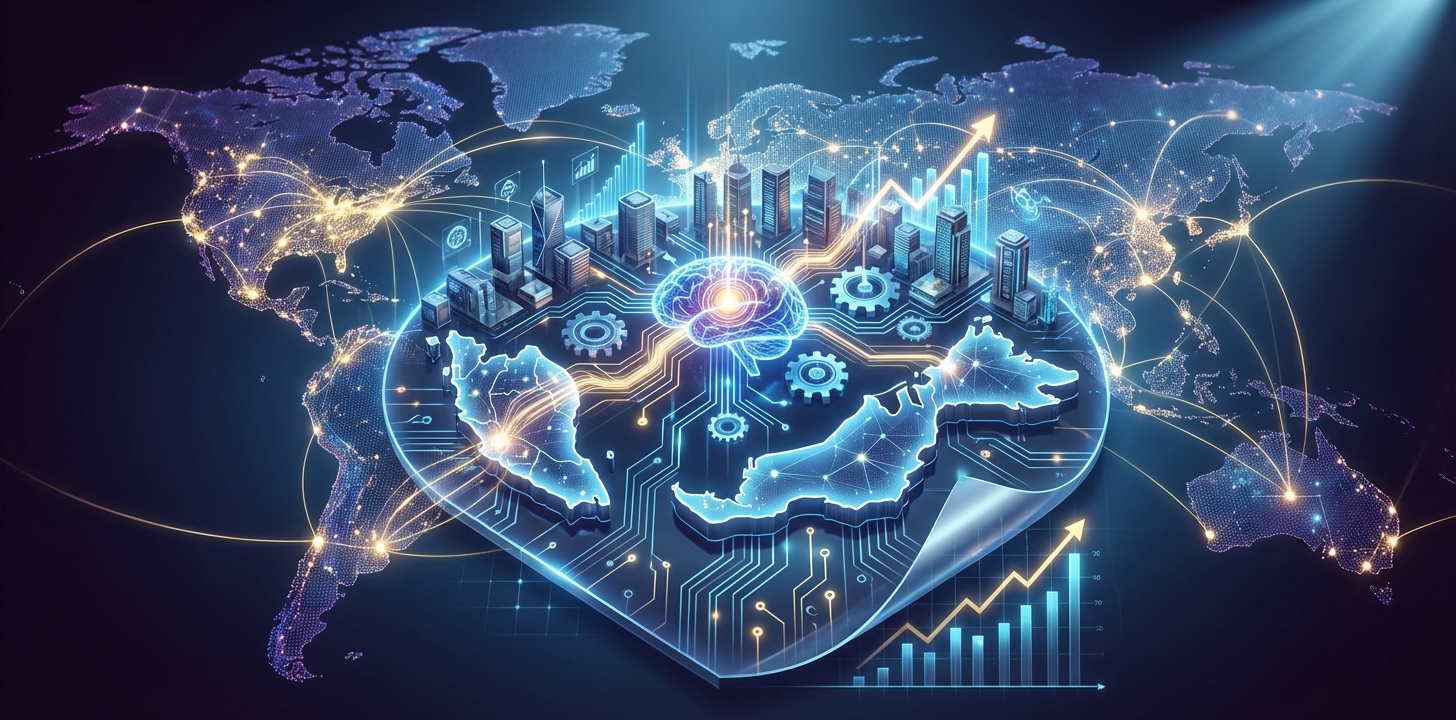
Malaysia is quietly becoming the "AI Powerhouse of Southeast Asia." Why? Because of land, power, and a strategic location. In 2026, Malaysia has transitioned from being a mere consumer of AI to a critical hub for AI infrastructure. 🇲🇾
The influx of data center investments from global giants has turned regions like Johor and Cyberjaya into the "Digital Engine Room" of the region. This isn't just about hosting servers; it’s about the "AI Transformation" of local industries. Small and Medium Enterprises (SMEs) in Malaysia are using AI tools to automate palm oil yield predictions and manage complex logistics for the halal hub economy.
Did you know? Malaysia’s focus on "AI Ethics for the Global South" has made it a leader in the ASEAN AI Framework, ensuring that AI development respects local cultural nuances rather than just following Western or Chinese standards.
The opportunity for Malaysians in 2026 is in AI Orchestration. Local startups are popping up to build "localized agents" that understand Manglish, local slang, and the specific business culture of Southeast Asia. We are seeing a "brain gain" as tech talent returns to Malaysia to lead these high-growth ventures.
What to Do Next
- Audit Your Workflow: Identify three repetitive tasks you do daily. In 2026, there is likely an "Agent" tool (like the ones listed on AIxploria) that can do 80% of that work for you [19].
- Focus on "Prompt Engineering 2.0": It's no longer about asking a question; it's about "chaining" actions. Learn how to tell an AI, "Find this data, summarize it, and then email it to my team."
- Prioritize Data Privacy: With the rise of on-device AI, check if your tools are running locally or in the cloud. Protect your personal and business "IP" (Intellectual Property) as data breaches become more common [5].
- Invest in Human Skills: While AI handles the logic, you must handle the empathy and strategy. Double down on leadership and complex problem-solving.
TL;DR - 2026 is the Year of Agents: AI is moving from "talking" to "doing," with autonomous agents managing complex workflows.
- Malaysia is a Rising Hub: The country is leveraging its infrastructure to become a central player in the global AI supply chain.
- Coding is Reborn: AI coding tools are making software development accessible to everyone, not just programmers.
- The Scaling Wall is Real: Innovation is shifting toward smaller, more efficient models rather than just "bigger" ones.
#AI #LLM #AIAgents #AITools #ChinaAI #USAi #MalaysiaAI #FutureOfWork #AI2026 #TechTrends #ArtificialIntelligence #SoutheastAsiaTech #DigitalTransformation
Found this article helpful? Share it with others!
Quick AI FAQ
How does this AI development affect Malaysian businesses?
Local businesses can leverage these AI breakthroughs to automate repetitive tasks, improve customer engagement via smart chatbots, and scale content production with 80% lower costs.
Is it safe to integrate AI into existing workflows?
Yes, when implemented with professional oversight. We focus on secure, privacy-compliant AI integrations that align with Malaysia's PDPA regulations.
Where can I get help with AI implementation in Penang?
JOeve Smart Solutions provides on-site and remote AI consultation for SMEs in Penang and across Malaysia, specializing in web apps, chatbots, and video automation.