Inside the 2026 AI War: Why US Giants Are Finally Uniting
Inside the 2026 AI War: Why US Giants Are Finally Uniting
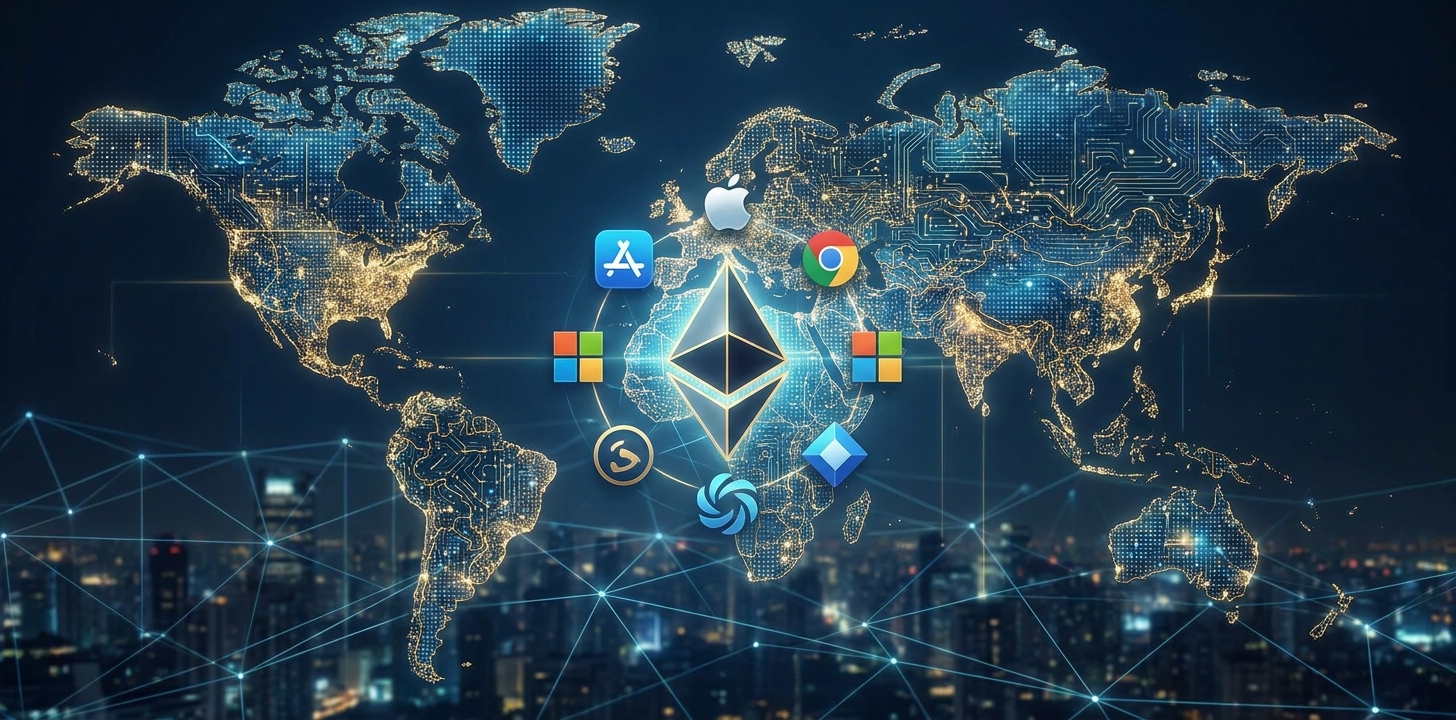
Imagine the scene: Sam Altman (OpenAI), Dario Amodei (Anthropic), and Sundar Pichai (Google) are all in a digital "war room." For years, these three have been locked in a high-stakes chess match, trying to out-build, out-fund, and out-hire one another. But suddenly, the rivalry has hit a pause button. They aren’t coming together for a group hug; they are coming together because they believe someone is stealing their "digital DNA." 🧬
In a move that has sent shockwaves through Silicon Valley and beyond, these rivals have formed an unprecedented alliance to combat "industrial-scale distillation attacks" coming from overseas competitors. It’s a moment that feels like a superhero movie where the hero and the villain have to team up to stop an even bigger threat. But in the world of 2026 AI, the "villain" isn't a person—it’s a process that allows rival companies to "clone" the intelligence of billion-dollar models for a fraction of the cost.
Why This Matters
In plain English, "distillation" is the AI version of taking a five-star chef’s secret recipe, tasting it once, and then recreating it perfectly in a basement kitchen. For companies like OpenAI and Google, who spend billions on compute power and data, having their models "copied" by rivals like DeepSeek or Minimax is a nightmare scenario. It’s not just about hurt feelings; it’s about the entire business model of the US AI industry. 📉
If a competitor can use an API to "teach" their smaller, cheaper model how to think like GPT-5 or Claude 4, the original creators lose their competitive edge. This alliance matters because it signals a shift from "open innovation" to "fortress AI." We are moving into an era where the most powerful models will be guarded like nuclear codes, and the friction between the US and China over AI supremacy is reaching a boiling point.
The Big Story
The headline story of the week is this historic "Anti-Copying Alliance." Reports indicate that OpenAI, Anthropic, and Google have identified specific instances where Chinese firms—including DeepSeek, Moonshot AI, and Minimax—have allegedly used "distillation attacks" to extract the logic and reasoning capabilities of Western models [14].
Wait, what exactly is an "industrial-scale distillation attack"? Think of it like this: A rival AI sends millions of prompts to Claude 3.5. It records every answer. It then uses those answers to train its own model, effectively "absorbing" the wisdom of the more expensive model without having to do the original research. Anthropic recently went on the record, identifying these attacks as a primary threat to their intellectual property [19].
But here’s what everyone’s missing: This isn't just about protecting code. It’s about the massive amount of energy and money required to stay on top. Anthropic recently signed a deal for multiple gigawatts of TPU (Tensor Processing Unit) capacity with Google and Broadcom [11]. To put that in perspective, one gigawatt can power roughly 750,000 homes. When you are spending that much on "electricity for thinking," you don’t want someone else downloading your brain for free.
"We've identified industrial-scale distillation attacks on our models... it's a direct threat to the ecosystem of innovation we've built." — Anthropic Spokesperson [19]
US Watch
While the alliance grabs the headlines, the individual players are making massive solo moves. Anthropic is the name on everyone’s lips right now. They’ve quietly reached a staggering $30 billion revenue run rate, effectively closing the gap with OpenAI faster than anyone predicted [16]. They also just launched Claude Design, a new tool that lets users collaborate on visual prototypes—a direct shot at Canva and Adobe [17].
Meanwhile, Meta is refusing to be left behind. Mark Zuckerberg’s team just debuted Muse Spark (formerly code-named Avocado), their first major model since the blockbuster $14 billion deal to bring in talent like Alexandr Wang [20]. Meta’s strategy remains clear: use their massive social media footprint to put AI in the hands of billions, while the "Big Three" focus on high-end enterprise reasoning.
The 2026 Power Rankings
Company Key 2026 Move Secret Weapon Current Vibe OpenAI Sora Global Rollout First-mover advantage "The Establishment" Anthropic $30B Revenue Run Rate Constitutional AI (Safety) "The Rocket Ship" Veo 3 Video Tools Infinite Compute (TPUs) "The Sleeping Giant Awakes" Meta Muse Spark Release Open-source (mostly) "The Disruptor" China Watch Across the Pacific, the "distillation" controversy hasn't slowed down the pace of innovation. Companies like Zhipu AI and Alibaba are pushing the boundaries of what’s possible with limited hardware. Despite US export bans on high-end chips, Alibaba’s next-gen silicon is reportedly narrowing the performance gap [2]. However, the "copying" allegations have created a PR nightmare for firms like DeepSeek and Minimax. The contrarian take here? Distillation might actually be a sign of respect. If the US models weren't worth copying, no one would be trying. But for the Chinese AI ecosystem, the goal is to move beyond "copying" to "leapfrogging." With companies like Kimi (Moonshot AI) gaining massive traction in long-context window processing, the 2026 AI race is no longer a one-horse race. Global Signal The rest of the world is watching this "AI Cold War" with a mix of awe and anxiety. The UK has decided to stop waiting for Silicon Valley and has launched its own $675 million Sovereign AI Fund to build homegrown capabilities [6]. It’s a signal that nations now view AI compute as a utility—like water or electricity. Perhaps the most "2026" news of all comes from the world of dating and work. Tinder and Zoom have begun implementing mandatory eye-scans to prove you are a human [8]. Why? Because AI bots have become so convincing that they are successfully catfishing people and attending corporate meetings on behalf of employees. Did you know? 💡 Sam Altman’s "Worldcoin" orb is now being used by Tinder to verify users. Gazing into the orb is no longer just for crypto-bros; it’s how you prove you’re not a bot before swiping right! [6] Malaysia Watch Closer to home, Southeast Asia is emerging as the "Golden Hub" for AI deployment. Thailand has become one of the first countries in Asia to get full access to the Sora video creation app, signaling OpenAI’s commitment to the region [1]. But the real breakthrough is happening in Kuala Lumpur. Malaysia has officially launched Ryt Bank, the nation’s first fully AI-powered bank [1]. This isn't just a bank with a chatbot; it’s a financial institution where AI handles everything from real-time credit scoring to personalized investment strategies for every citizen. The Malaysia Opportunity:
- Financial Inclusion: Ryt Bank can offer loans to "unbankable" individuals by analyzing non-traditional data (like e-wallet history) via AI.
- Sovereign Data: As US and China giants clash, Malaysia’s focus on localized AI (understanding Bahasa Melayu and local nuances) is creating a "digital buffer" that protects local interests.
- Regional Leadership: By adopting Sora and AI-banking early, Malaysia is positioning itself as the "AI Testbed" for the rest of ASEAN.
What to Do Next
- Audit Your AI Tools: If you are
Found this article helpful? Share it with others!
Quick AI FAQ
How does this AI development affect Malaysian businesses?
Local businesses can leverage these AI breakthroughs to automate repetitive tasks, improve customer engagement via smart chatbots, and scale content production with 80% lower costs.
Is it safe to integrate AI into existing workflows?
Yes, when implemented with professional oversight. We focus on secure, privacy-compliant AI integrations that align with Malaysia's PDPA regulations.
Where can I get help with AI implementation in Penang?
JOeve Smart Solutions provides on-site and remote AI consultation for SMEs in Penang and across Malaysia, specializing in web apps, chatbots, and video automation.