Revealed: The 2026 Secret Alliance Fighting China's AI Mastery
Revealed: The 2026 Secret Alliance Fighting China's AI Mastery
The AI world just had its "Avengers Assemble" moment, and it’s not because everyone decided to be friends. It’s because the stakes have become so high that the biggest rivals in Silicon Valley are now sharing secrets behind closed doors. We are talking about a geopolitical chess match where the board is made of silicon and the pieces cost billions of dollars each.
Imagine spending $65 billion on a single project just to keep your lead. That is exactly what OpenAI and Anthropic are projected to spend this year alone on training and operating their models [7]. But there’s a twist: while they are racing each other to build the "God Model," they’ve realized they have a common neighbor who is very good at "borrowing" their homework.
Why This Matters
In plain English? The "Wild West" era of AI is over. We have entered the era of AI Fortresses. For the last few years, AI was about who could build the coolest chatbot. In 2026, it’s about national security, massive infrastructure, and protecting intellectual property from being "siphoned" away.
If you think your subscription to ChatGPT or Claude is just about helping you write emails, think again. These tools are now the frontline of a global economic war. The companies building them are no longer just startups; they are becoming more powerful than some small countries, with revenues and energy needs to match. When Anthropic triples its revenue to $30 billion in a single year, it’s not just growth—it’s a paradigm shift [2].
The Big Story
The headline news this week is a massive "power up" for Anthropic. They’ve just expanded a gargantuan partnership with Google and Broadcom to secure "multiple gigawatts" of next-generation compute [1]. To put that in perspective, one gigawatt can power about 750,000 homes. Anthropic isn't just building a bigger brain; they are building a digital sun.
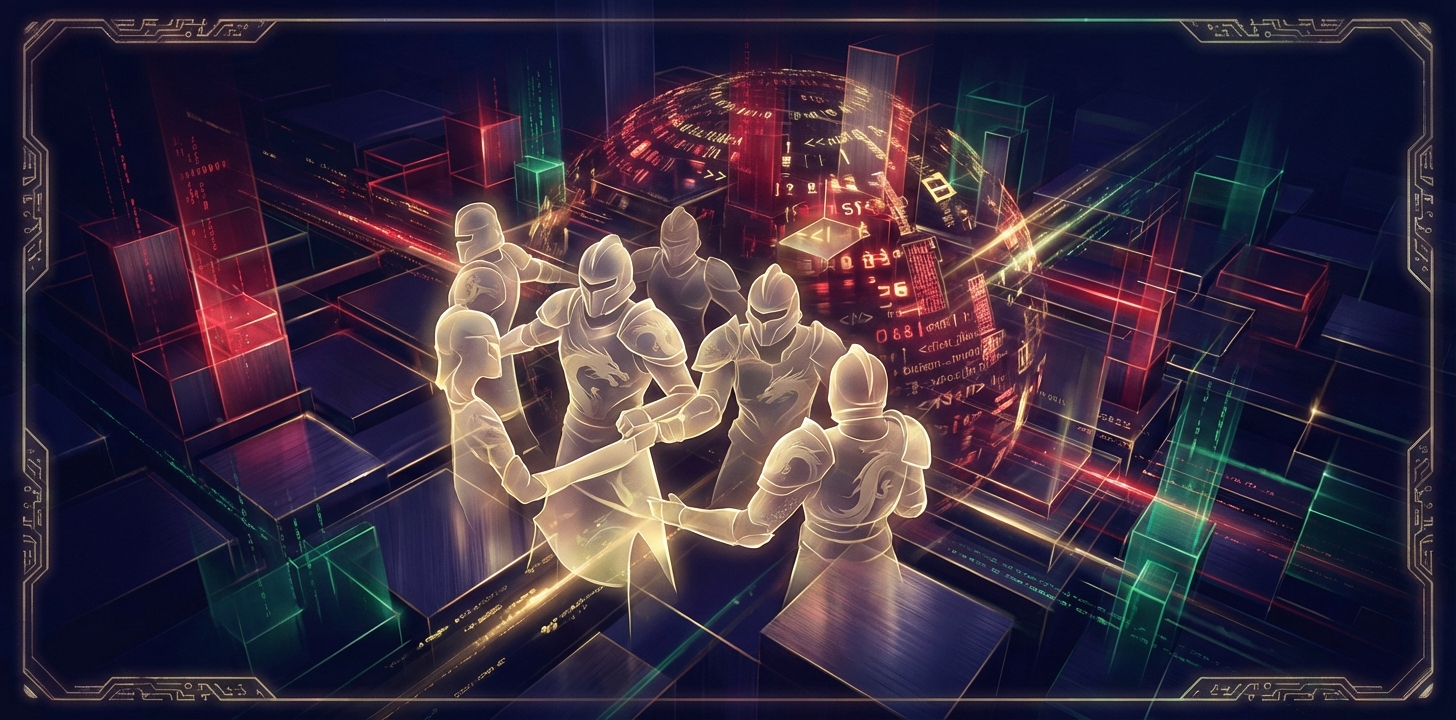
But here’s the kicker: Anthropic, OpenAI, and Google—companies that usually spend their days trying to steal each other’s talent—have begun quietly coordinating [8]. Why? Because they’ve detected a pattern of Chinese AI firms "siphoning" their model capabilities.
Think of it like this: if you spend $10 billion to write the world’s best textbook, and your competitor uses a cheap AI to summarize every page of that book for $100, they effectively get your $10 billion of knowledge for pennies. This "model distillation" has allowed Chinese firms to close the gap faster than anyone expected. Now, the US giants are banding together to build "digital fences" to stop their models from being used to train their rivals.
Anthropic also dropped a bombshell with its new model, "Mythos." They aren't just calling it a better chatbot; they’re calling it a "cybersecurity reckoning" [2]. Mythos is designed to hunt for vulnerabilities in software at a speed humans can't comprehend. It’s a double-edged sword: it can fix your apps, but in the wrong hands, it’s a digital lockpick.
| Feature | OpenAI (Projected 2026) | Anthropic (Projected 2026) |
|---|---|---|
| Annual Revenue | ~$40-50 Billion | $30 Billion [4] |
| Compute Partner | Microsoft (Azure) | Google & Broadcom [3] |
| Training Spend | ~$35 Billion | ~$30 Billion [7] |
| Core Focus | AGI & Consumer Apps | Safety & Cybersecurity |
| US Watch | ||
| The US is doubling down on "Homegrown Silicon." Microsoft has officially brought its "Maia 200" chip online in Iowa [19]. For years, the world was addicted to NVIDIA chips (and they still are), but Microsoft is tired of paying the "NVIDIA tax." By building their own chips, they can tailor their data centers specifically for the weird, complex math that AI agents require. | ||
| Wait, what? Even with their own chips, the costs are spiraling. The energy demand is so high that tech companies are now looking at reviving nuclear reactors just to keep the lights on in their server rooms. It’s no longer about who has the best code; it’s about who has the most electricity. | ||
| Meanwhile, the US government is getting more involved in the boardroom. There’s a growing "Eye on AI" focus on how these companies handle cybersecurity risks [5]. If a model like Mythos can find a hole in a bank's security, the government wants to make sure that model stays behind a very thick, very American wall. | ||
| China Watch | ||
| While the US focuses on massive, expensive "Frontier" models, China is playing a different game: Efficiency and Humanoids. Companies like ByteDance (the owners of TikTok), Alibaba, and Tencent are mastering the art of "Small AI." They are building models that are 90% as good as GPT-4 but run at 10% of the cost. | ||
| DeepSeek, a rising star in the Chinese AI scene, has been making waves by releasing open-source models that rival the best in the West. This has created a massive headache for Silicon Valley. If China can provide high-quality AI for free or very cheap, the $30 billion revenue models of companies like Anthropic might be in trouble. | ||
| But the real "wow" factor in China right now is humanoid robots. While we use AI to write poems, China is using it to give brains to thousands of robots designed for factory floors. Baidu and Xiaomi are leading the charge here, integrating their LLMs (Large Language Models) directly into physical machines. |
"The goal isn't just a chatbot that talks; it's a worker that thinks." — Anonymous industry analyst on China's humanoid push.
Global Signal
The world is splitting into two digital hemispheres. On one side, you have the US-led alliance (OpenAI, Google, Anthropic, Microsoft) focusing on massive scale and high-security "frontier" models. On the other, China is building a nimble, efficient, and physically integrated AI ecosystem.
This "Global Signal" suggests that the middle ground is disappearing. If you are a country or a company, you will soon have to choose whose "AI Stack" you are building on. This isn't just about software; it’s about whose chips you use, whose data centers you trust, and whose safety standards you follow.
Did you know?
The amount of data used to train a top-tier AI in 2026 is roughly equivalent to a human reading books for 200,000 years without stopping for a snack! 📚
Malaysia Watch
So, where does Malaysia fit into this $65 billion tug-of-war? We are sitting on a goldmine. As the US and China scramble for data center space and chip manufacturing, Malaysia has become the "Neutral Ground" of choice for infrastructure.
- Data Center Hub: With Singapore hitting land and energy limits, Johor and Selangor have seen a massive influx of AI data center investments. We provide the land and the cooling; they provide the silicon.
- The Silicon Shield: Malaysia’s long-standing expertise in back-end semiconductor manufacturing (assembly and testing) is more valuable than ever. As Broadcom and Google ramp up chip production, Malaysia remains a critical link in the supply chain.
- The Talent Opportunity: There is a massive opening for Malaysian developers to specialize in "Model Distillation" and "Agentic Workflows." We don't need to build the $65 billion model; we can be the experts who show businesses how to use them efficiently.
What to Do Next
- Audit Your AI Stack: If your business is relying on "free" or "open" models, check their origin. With the new US-China "digital fences," some models might suddenly lose support or access in certain regions.
- Focus on 'Agents,' Not Just 'Chat': The 2026 trend is AI Agents—AI that doesn't just talk but actually performs tasks (booking flights, coding apps, managing inventory). Start looking at tools that do things.
- Upskill in AI Security: As models like Mythos become common, cybersecurity will be the #1 job in tech. If you’re in IT, learn how to defend against AI-driven social engineering and code exploits.
- Watch the Energy Sector: If you're an investor, don't just look at AI software. Look at the companies providing the copper, the cooling, and the electricity that power these gigawatt-scale data centers.
TL;DR - The $65B Bet: OpenAI and Anthropic are spending historic amounts of cash to stay ahead in the AI race [7].
- Unlikely Allies: Rivals Google, OpenAI, and Anthropic are secretly collaborating to block Chinese firms from "siphoning" their tech [8].
- Anthropic's Surge: Anthropic's revenue tripled to $30B as they partnered with Google and Broadcom for massive compute power [4].
- Malaysia's Role: The country is becoming a vital "neutral" hub for the physical infrastructure (data centers and chips) required by these global AI giants.
#AI #LLM #AIAgents #AITools #ChinaAI #USAi
Found this article helpful? Share it with others!
Quick AI FAQ
How does this AI development affect Malaysian businesses?
Local businesses can leverage these AI breakthroughs to automate repetitive tasks, improve customer engagement via smart chatbots, and scale content production with 80% lower costs.
Is it safe to integrate AI into existing workflows?
Yes, when implemented with professional oversight. We focus on secure, privacy-compliant AI integrations that align with Malaysia's PDPA regulations.
Where can I get help with AI implementation in Penang?
JOeve Smart Solutions provides on-site and remote AI consultation for SMEs in Penang and across Malaysia, specializing in web apps, chatbots, and video automation.